22/10/2026 13:02
What Comes After Assembly? YouTube End Screens for Cambodian Storage-Bin Shops
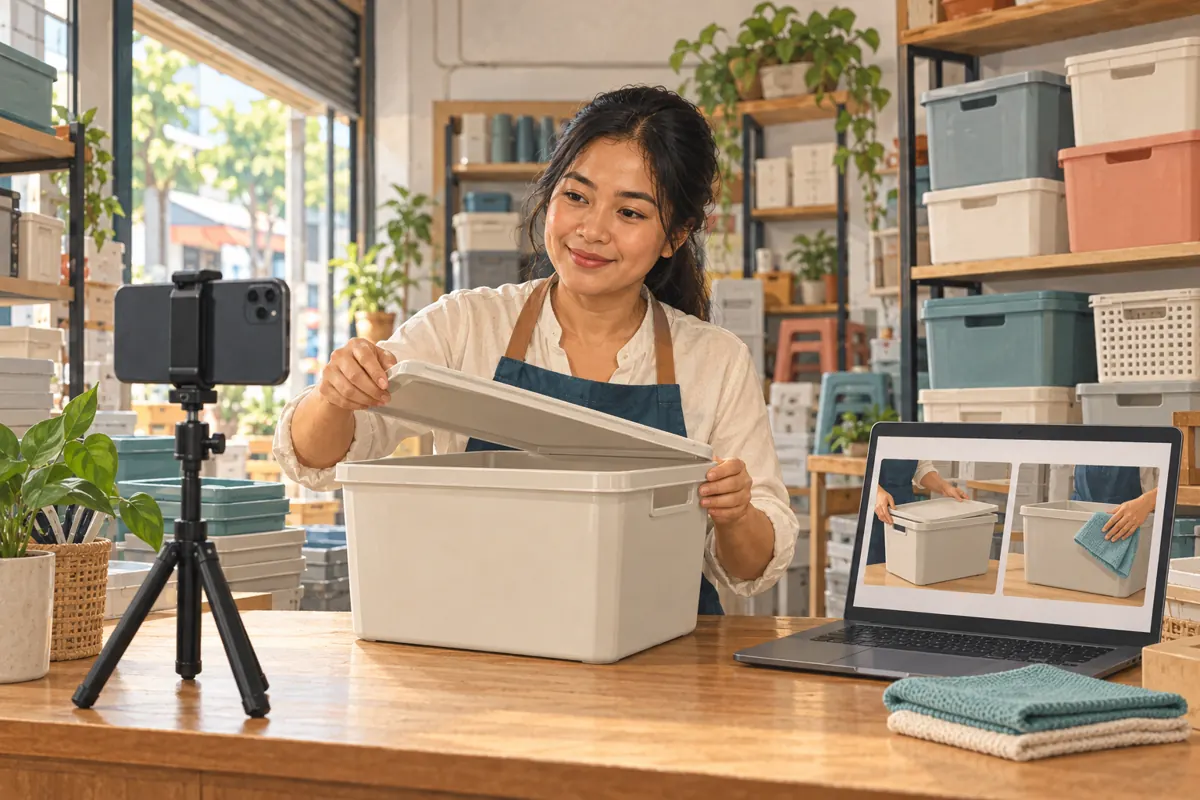
A storage-bin demonstration can answer one question and leave another unresolved. Viewers may understand how the lid fits but still wonder how to clean the corners or whether the assembled container fits their shelf. For a Cambodian household-goods shop, the closing moments offer a useful place to introduce that next answer. This guide explains how to plan, build and review a YouTube end screen that connects two relevant demonstrations. It also explains where SMM panel records belong in the process: a service delivery record cannot establish that viewers understood the product, live in Cambodia or intend to buy it.
1. Define the question that remains after the demonstration
Start with the viewer’s unfinished task. In a hypothetical Phnom Penh shop, the first video shows how to fit a removable lid to a storage bin. Staff regularly hear a separate question about reaching the inside corners during cleaning. That makes a cleaning demonstration a plausible next destination. An unrelated new-arrival video might be more recent, but it does less to continue this particular conversation.
Write one planning sentence: after watching this demonstration, the viewer should be able to find the cleaning method for this model. Use that sentence to judge every choice in the ending. If a destination, spoken invitation or thumbnail does not support it, leave it out. This gives the editor a practical acceptance test and prevents the final frame from becoming a crowded advertisement for everything the shop sells.
2. Check the basic feature requirements
YouTube permits end screens within a video’s final 5–20 seconds, and the video must be at least 25 seconds long. End screens are unavailable on videos designated made for kids and on certain viewing surfaces. Confirm suitability before editing. These requirements are documented in [YouTube’s end-screen help](https://support.google.com/youtube/answer/6388789?hl=en).
For this workflow, choose an ordinary product demonstration with enough room to finish its explanation comfortably. Do not stretch a tiny clip with a long empty ending merely to qualify. If the existing recording ends abruptly while the seller is still attaching the lid, plan a better closing shot for the next version. The decision should serve the viewer’s understanding, rather than force a feature into footage that has no useful place for it.
3. Prepare the destination before adding the invitation
Watch the proposed cleaning guide from beginning to end. Confirm that it shows the same bin construction, lid type and removable parts. Similar colours can conceal different products. A guide for a smooth interior may not answer questions about a model with grooves or a removable insert. Describe any difference openly rather than allowing the thumbnail to imply an exact match.
Check that the destination begins with its promised answer. Avoid sending someone through another lengthy shop introduction before showing the relevant product. For Cambodian customers, choose narration and captions that suit the intended audience, with consistent product names and units. Cleaning advice should follow the product’s documented care instructions; do not improvise chemical, heat-resistance or food-storage claims. The handoff is ready only when both videos make accurate, compatible promises.
4. Choose one useful next step
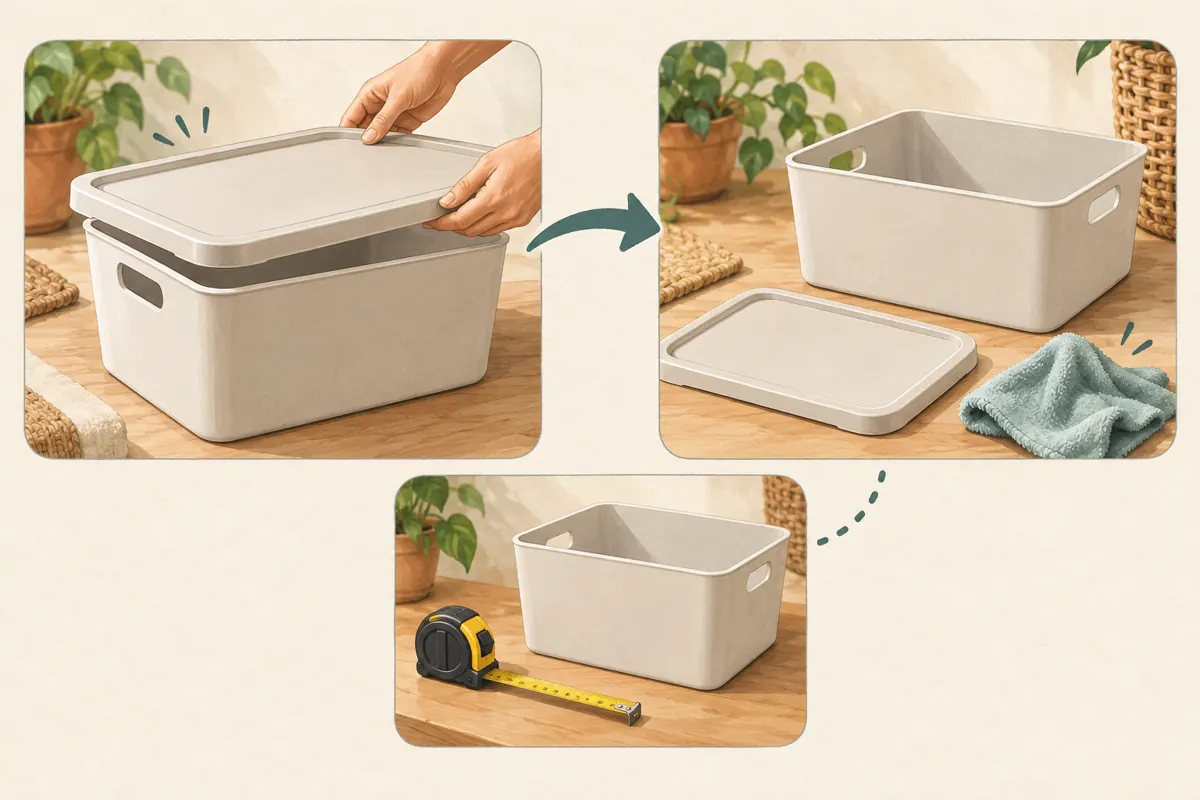
Decide whether the immediate need is assembly, care or sizing. For the hypothetical shop, cleaning follows assembly because that is the recurring question staff want to answer. If customers instead struggle to compare the bin with a shelf opening, a measurement guide may be the stronger destination. Make that choice from actual questions recorded by the shop, without treating a few conversations as a survey of all Cambodian buyers.
Begin with one destination so the invitation is easy to understand and review. A second choice should have a separate, clear purpose. For example, cleaning and dimensions address different needs; two nearly identical assembly videos create uncertainty. Keep a short internal note explaining the choice. When another employee updates the channel later, that note helps them preserve the intended journey instead of replacing the destination simply because another upload is newer.
5. Film a closing frame that leaves the product visible
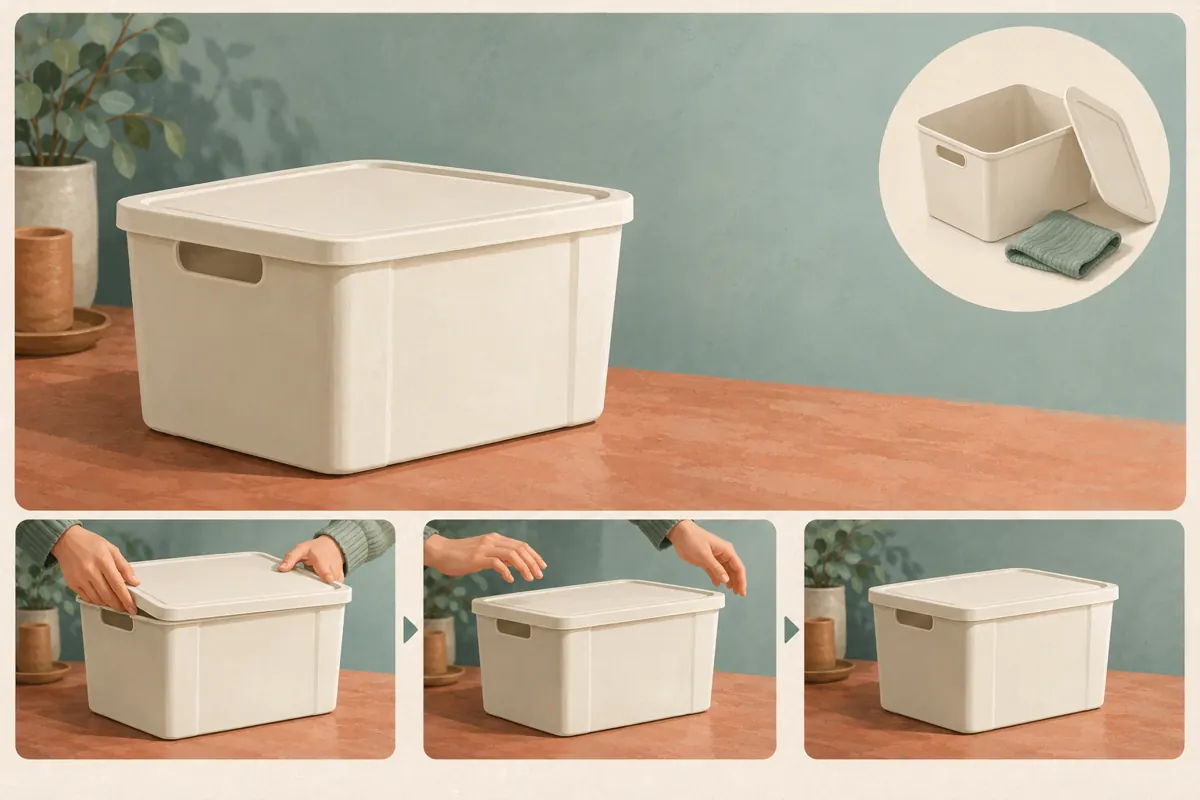
Finish the demonstration before introducing the next task. Show the lid fully seated, withdraw the hands and hold a steady product view. Compose the closing shot with uncluttered space beside the bin. A close-up of the final fastening step is valuable evidence of how the product works; covering it with a recommendation would undermine the explanation.
YouTube lets viewers hide end screens for the current viewing and show them again. Its guidance reinforces the need to avoid obscuring crucial visuals. See [YouTube’s explanation of hiding end screens](https://blog.youtube/news-and-events/hiding-end-screens-what-youtube-creators-need-to-know/). In the hypothetical shop’s script, a suitable closing invitation is: “For this model’s inside corners and lid, watch the cleaning guide next.” Deliver it naturally, without claiming that another video contains a secret buyers must discover before ordering.
6. Build and test the handoff in YouTube Studio
In YouTube Studio, open Content, select the video, then choose Editor and End screen. Add a Video element and select the specific cleaning guide. Adjust placement and timing, preview playback and save. YouTube documents these controls in its [end-screen instructions](https://support.google.com/youtube/answer/6388789?hl=en).
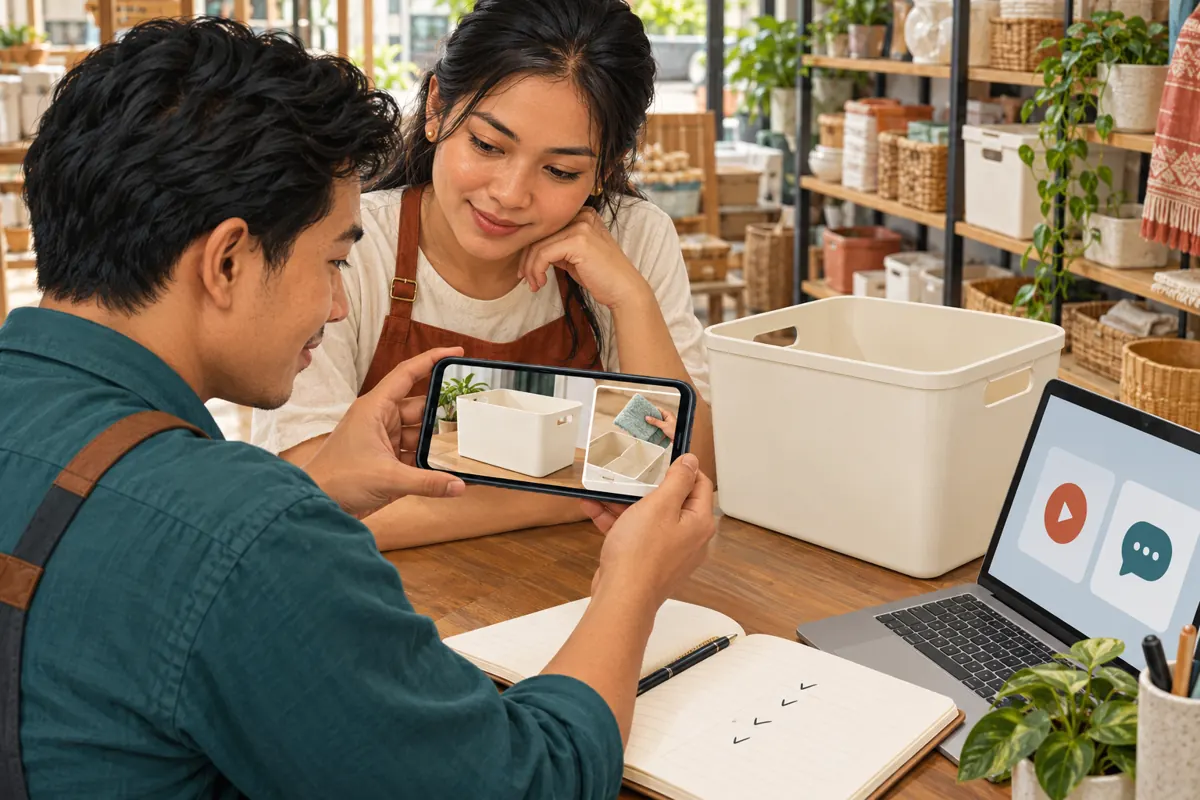
Review the saved result as a viewer, including on a phone in the YouTube app. Confirm that the recommendation opens the intended upload and that its first scene matches the invitation. Ask a colleague who did not edit the footage to describe what they expect to see next. If they expect a price list but reach a cleaning lesson, revise the invitation. Record the source video, destination video, review date and reviewer so a later change can be checked against a known working version.
7. Make the explanation work without the overlay
A complete demonstration should still make sense when someone does not follow the recommendation. Keep the essential assembly result, model identification and relevant limitations in the main explanation. The closing invitation should offer further help, not withhold a necessary step. A customer who only needs to fit the lid should be able to finish that task without opening another video.
Give the companion guide a distinctive, accurate title and mention its subject clearly. If staff send the original video in a customer conversation, they can also provide the companion guide directly when it answers the person’s question. Use a short contextual sentence, such as explaining that the second video covers the same model’s lid. Do not repeatedly send unsolicited links or turn every support exchange into a request for likes, subscriptions or another viewing.
8. Keep SMM catalogue claims separate from this task
The supplied catalogue includes the exact public service name “YouTube Social Shares from Twitter”. Its description is empty. The name labels a sharing-related service, but the supplied information does not establish how it operates, who participates, where an audience lives or whether it complies with platform rules. It also provides no basis for treating the service as end-screen configuration or a way to generate qualified cleaning-guide viewers.
YouTube prohibits artificially inflated engagement and warns that a hired promoter’s methods can affect the channel. Review its [fake engagement policy](https://support.google.com/youtube/answer/3399767?hl=en-419) before considering a service. Decline methods that manipulate metrics. Purchased engagement is not evidence of genuine interest, sales, advertising delivery or Cambodian users. For this project, assign the concrete work first: prepare the companion guide, verify the handoff and answer real enquiries. No panel purchase is necessary to complete those tasks.
9. Review navigation and customer outcomes separately
YouTube provides an End screen element click rate metric under a video’s Analytics and Engagement area. Consult the [official measurement instructions](https://support.google.com/youtube/answer/6388789?hl=en). Use it to examine the navigation step, while keeping customer enquiries and confirmed orders in separate records.
In a hypothetical review, staff might observe that viewers used the recommendation while cleaning questions still appeared in messages. That does not automatically mean the handoff failed. The destination may omit a detail, the question may concern another model, or the enquirer may never have watched either video. Read the actual questions before changing the ending. Note what changed, when it changed and any simultaneous promotion. Compare similar review periods, acknowledge limited evidence and avoid attributing every later purchase to the end screen.
10. Fix common mistakes and assign ongoing ownership
Common mistakes include selecting a similar-looking product, inviting viewers to a guide that remains unfinished, covering the final assembly detail and using vague language such as “watch this”. Another is changing the destination without checking the recorded invitation. If the presenter says “cleaning guide” but the recommendation now opens a seasonal offer, the ending has become inaccurate even though the link still works.
Assign one employee to review the pair whenever the product changes, a guide is replaced or the shop receives a relevant correction. Keep the maintenance note brief: current model, source upload, destination upload and reason for the pairing. If no accurate companion guide exists, remove the invitation until one is ready. Maintaining a small set of coherent demonstrations is more useful than attaching recommendations to every upload without checking whether they still help.
Frequently asked questions
Should every storage-bin video lead to the same cleaning guide?
Only when the guide genuinely applies. Different lid fittings, inserts or materials may require different explanations. Review the product match before reusing a destination. If several models share documented care instructions, explain that scope in the guide so viewers can identify whether their container is included.
What if the shop has no suitable second video?
Finish the first demonstration without promising a nonexistent resource. Collect recurring questions and select one that warrants a separate guide. Film and review that answer before adding the invitation. A complete standalone video is preferable to a handoff that sends customers to an unrelated upload.
Can an end-screen click be counted as a sales lead?
A click alone does not establish purchase intent or identify a qualified buyer. Define a lead through an explicit business action, such as an enquiry about a particular model and delivery requirement. Even then, distinguish an enquiry from an accepted order and avoid claiming attribution that the records cannot support.
Should the next guide be in Khmer or English?
Choose according to the audience for that specific video pair. If the first demonstration serves Khmer-speaking customers, make the next explanation understandable to them too. Have a fluent reviewer check product terms and instructions. Do not assume that English narration makes a guide more credible or that every Cambodian viewer prefers the same language.
What should staff investigate when viewers do not continue?
First test whether the destination is correct and the invitation is understandable. Then consider whether the next topic is useful at that point. Some viewers may already have their answer. Avoid repeatedly changing several details together, because that makes later observations harder to interpret. Low continuation alone is not a reason to purchase engagement.
Explore the current service catalogue, create an account, or ask a specific question through support tickets.
- YouTube Help: Add end screens to videos
- YouTube Blog: Hiding end screens — What YouTube creators need to know
- YouTube Help: Fake engagement policy
Prepared with AI assistance. Illustrations explain the workflow and do not represent customer results.