20/10/2026 21:05
Will the Demo Be Public Before the Shop Opens? YouTube Scheduling for Cambodian Lunchbox Shops
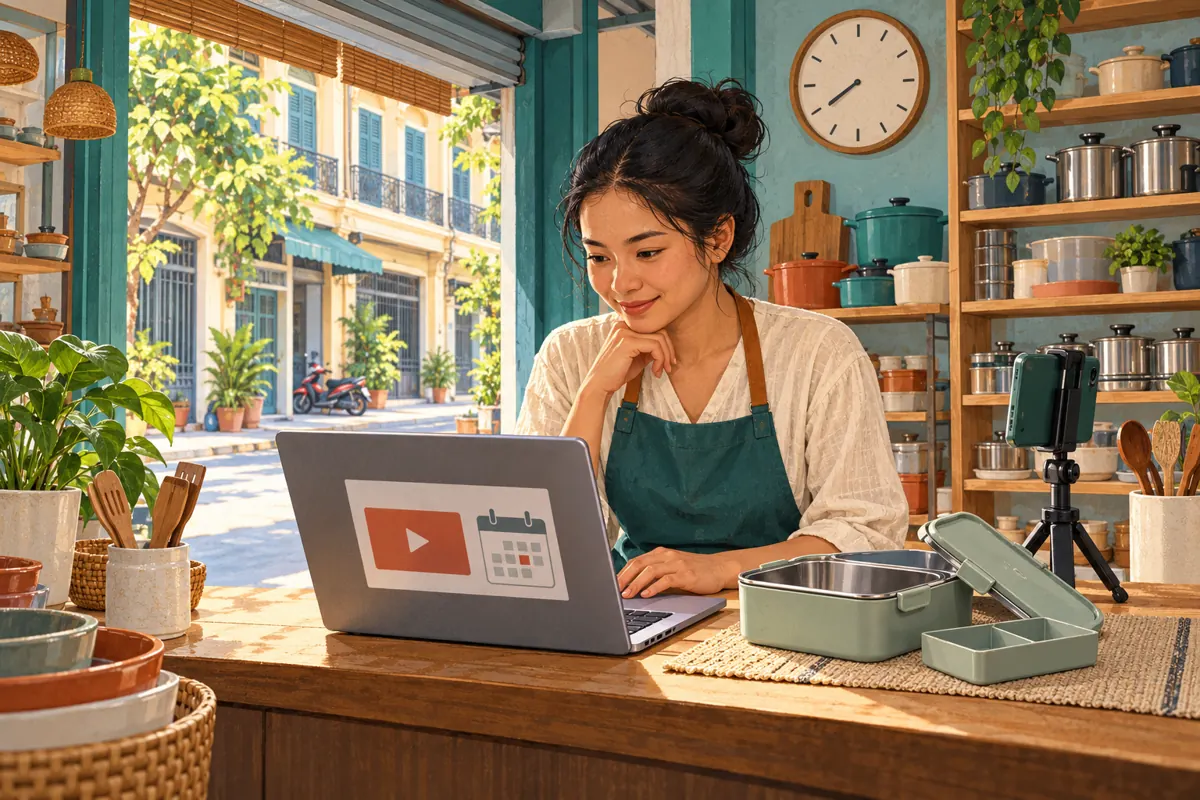
A lunchbox demonstration can be finished while the shop’s promotion is still unready. The video might show yesterday’s bundle, the announcement might promise collection before staff arrive, or the customer link might lead to a private upload. For Cambodian kitchenware businesses, scheduled publishing is useful when it supports a coordinated opening routine. This guide follows a hypothetical Phnom Penh lunchbox shop preparing a recorded demonstration of a removable divider. It explains how to choose a release time, review the product promise, check public playback, and decide what an SMM panel request can actually contribute. The shop, timetable and examples are illustrative, not reported customer results.
1. Decide what must be ready when the video appears
Begin with the buyer’s next action. After watching the divider come out, should someone ask about dimensions, request a colour, or visit the counter? Choose one primary action and prepare the information needed to complete it. A demonstration that invites collection needs a confirmed collection arrangement. A demonstration that invites questions needs someone who can answer them accurately.
In the hypothetical shop, staff start answering messages at 8:00 a.m. and collection begins at 9:00 a.m. The owner wants the video available before replies start. Those are three separate events: publication, message handling and collection. Write each into the launch note rather than using one ambiguous instruction such as “launch tomorrow morning.” This simple distinction prevents a social post from becoming an accidental promise that the shop is already serving customers.
2. Approve the exact lunchbox and the exact claim
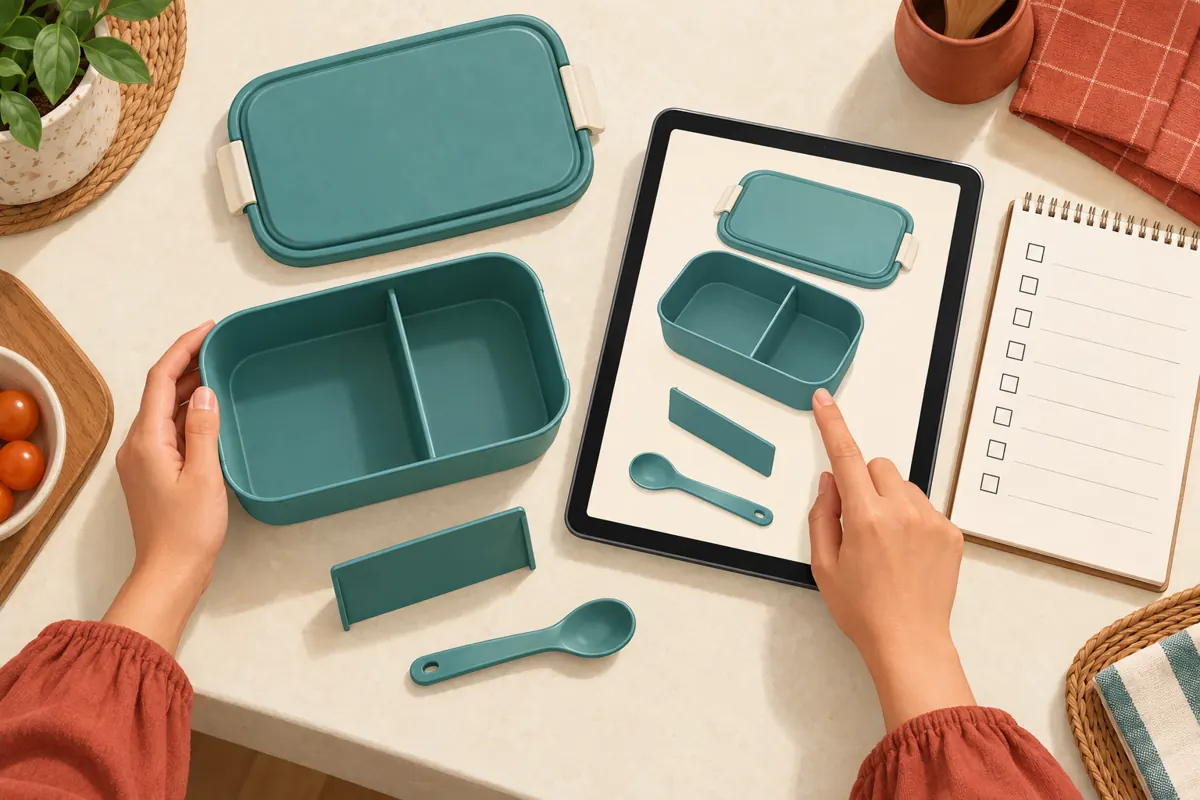
Place the filmed sample beside an item from the stock being offered. Compare the lid, divider, fastening clips, included spoon and packaging. Similar-looking lunchboxes may have different fittings. If the demonstration shows a removable divider but the available version has fixed compartments, moving the publication time will not fix the underlying mismatch. Record the model reference in the team’s preparation note.
Review spoken claims separately from visible actions. Showing a divider lifting out supports an explanation of that action; it does not establish that the container is leakproof, microwave-safe or suitable for every food. Use documented product instructions for such claims. For Khmer-speaking buyers, check that the spoken product terms and any English model reference identify the same item. A colleague should be able to match the video to the correct shelf without guessing.
3. Upload with time to inspect the finished playback
Leave a review window between uploading and announcing the release. YouTube explains that lower-quality processing happens first and higher resolutions can take longer. Its guidance recommends checking the player’s Quality menu to see which versions are available. An uploaded file should therefore trigger a playback review, not an immediate assumption that every detail is ready for viewers.
For this demonstration, inspect the moment when the divider leaves its slot. Can a viewer distinguish the removable part from the moulded base? Listen for an explanation that arrives before the hand covers the relevant detail. Check on a phone as well as the editing screen. If the action remains unclear, improve the shot or narration. Extra promotion cannot make an obscured fitting easier to understand. Keep the launch flexible until the product’s main teaching point survives ordinary viewing.
4. Set the schedule and read it back
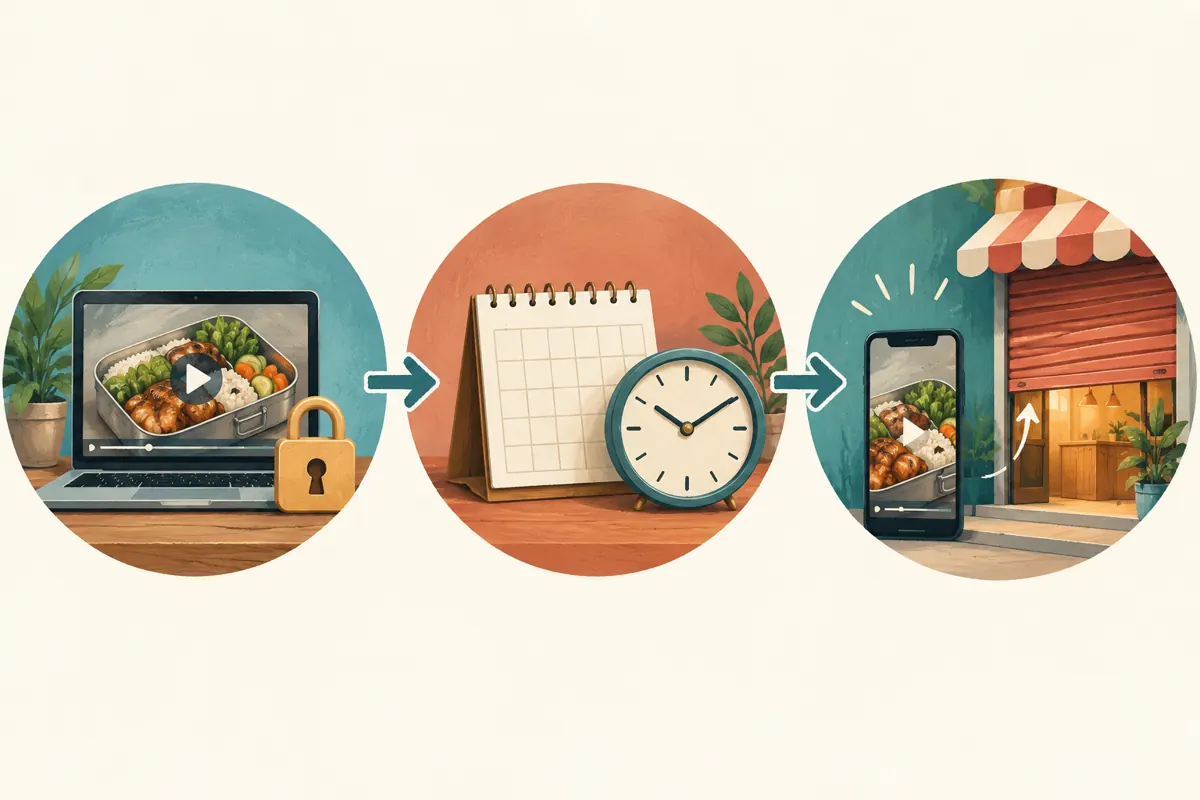
YouTube’s scheduled publishing changes a private video to public at a chosen time. In YouTube Studio, start with Create and Upload videos, add the file and details, then use Schedule. Select the intended date, time and time zone, and confirm Schedule. Read the saved setting back against the shop’s launch note.
For the hypothetical launch, the owner chooses 7:45 a.m. Cambodia time, before message handling starts. That is an operational choice, not a claim about the best hour for YouTube reach. Write the date with the month spelled out, include the time zone, and name the person responsible for verification. A freelancer working elsewhere should not have to infer what “morning” means. The useful question is whether the chosen time supports the shop’s service capacity and leaves room to resolve a problem before announcements go out.
5. Keep the preview audience separate from customers
A reviewer’s ability to watch does not prove that buyers can watch. YouTube distinguishes private videos, which have restricted viewing, from unlisted videos, which anyone possessing the link can view and reshare. Choose preview access deliberately. Do not use an unlisted link as if it were a confidential approval room, especially when the footage includes an unreleased bundle or a supplier’s sample.
Prepare the customer announcement as a draft while the video is awaiting release. Give it a practical opening: explain that the clip shows how the divider comes out and what information buyers should send when asking about a model. Keep the instruction to share separate from the instruction to approve. A reviewer might approve the filming while the stock manager still needs to confirm availability. Neither approval alone establishes that the customer announcement is ready.
6. Treat public playback as the announcement checkpoint
At release time, open the customer-facing video link from a signed-out browser or another ordinary viewer session. Play the beginning and the divider demonstration. Check the title, description and contact destination. This is a recommended shop procedure: it tests the actual route a buyer will follow instead of relying solely on what the owner can see inside Studio.
Then release the prepared announcement through the shop’s normal channels. In the hypothetical example, a staff member checks playback before sharing the link after 8:00 a.m. The message makes clear that collection begins later. If nobody is available to perform the check, choose a release arrangement the team can supervise. Scheduling reduces the need to press a publication button at the right moment, but a useful launch still needs someone to notice a wrong product, inaccessible link or outdated offer.
7. Make an SMM panel decision based on the actual task
For khmer-mmo.com readers, the important distinction is between publishing a recorded video and buying a separately listed service. The brief includes the exact public service name “Youtube Live Stream Views | Stay time: 15 min”. Its name and category identify a live-stream-view listing. No description was supplied. It provides no basis for treating that service as a scheduler, a recorded-video promotion package, or a way to reach Cambodian lunchbox buyers.
Do not select a service simply because it mentions YouTube. First identify the intended task and obtain enough information to assess the proposed method. YouTube prohibits artificially inflating engagement and warns that a hired promoter’s actions can affect the channel. Decline methods that breach those rules. Purchased engagement is not evidence of genuine interest, sales, advertising delivery or Cambodian users. For this launch, completing the playback and enquiry workflow may be the correct decision without placing any panel order.
8. Change the launch when the underlying facts change
Suppose, hypothetically, the morning stock check finds that the advertised divider version has not arrived. The decision depends on what the video promises. An evergreen explanation may remain useful if its availability wording is accurate. A specific invitation to collect that model needs correction or postponement. Make this decision before sending people to the video, and update every prepared announcement affected by it.
YouTube allows scheduled publication times to be edited through the video’s visibility settings. After making a change, review the saved result and update the team note. Record what changed, why, and who now owns the release check. Avoid two people independently adjusting the same launch. One may delay the video while the other sends the original announcement. Keep responsibility explicit even in a small shop where most work is coordinated through informal messages.
9. Avoid mistakes that create false confidence
A common mistake is treating the publication date printed beneath the video as the complete timing record. YouTube says this date is based on Pacific Standard Time, so it can differ from the date shown in Studio for a Cambodian release. Use the saved schedule and your observed playback check to investigate timing questions.
Another mistake is treating publication as stock confirmation. A video can remain useful long after a particular colour sells out, so distinguish the demonstration from the current offer. Also avoid promising instant replies when the counter team is unloading deliveries. Finally, do not interpret a larger view count as proof that scheduling worked commercially. A technically successful release and a successful sales conversation are different outcomes. Review both, using evidence appropriate to each, rather than letting one visible counter stand in for the entire launch.
10. Review the first enquiries and improve the next release
After the launch, keep a short note of practical friction. Did people ask whether the divider was included? Did they confuse the demonstrated size with a larger model? Did anyone arrive before collection began? These questions help identify missing information. They do not automatically establish how representative those viewers are or prove that one publication time caused the response.
For the next video, change the smallest relevant part of the workflow. Show the included pieces together if the bundle was unclear. Move the collection instruction nearer the invitation to visit if timing caused confusion. Keep order records, customer questions and confirmed transactions distinguishable in the review. A repeatable process should make the shop’s content easier to use and its promises easier to fulfil. It does not need a claim that every scheduled upload will produce more reach or sales.
Frequently asked questions
Should the video appear before the shop opens?
It can, if the description and announcement clearly explain when staff will respond and when collection begins. Choose a time that the team can support. Publishing earlier has little practical value if customers encounter unclear availability or nobody can check that the intended video is accessible.
Can I send customers the link while the video is still private?
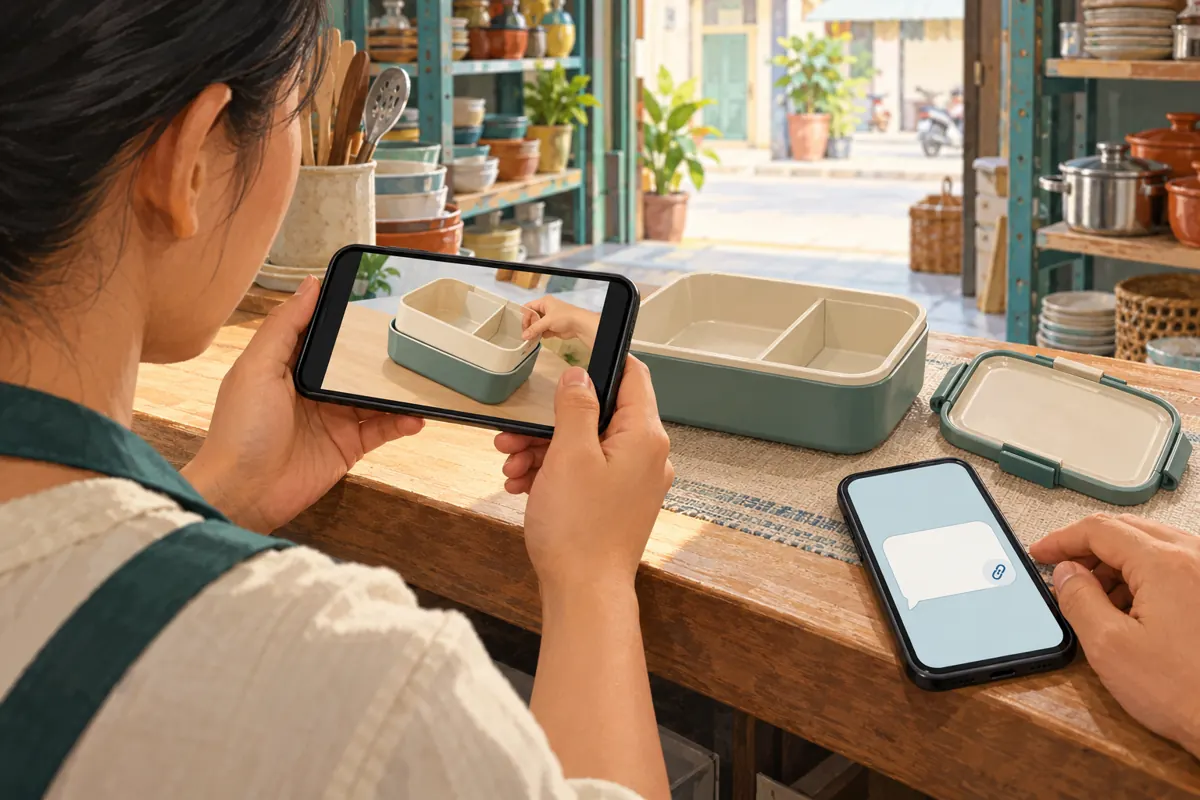
Possessing a private video’s URL does not give an ordinary customer viewing access. Keep the announcement in draft until public playback has been checked. If you need advance review, arrange the appropriate preview access and explain that the reviewer is checking content, not authorising customer distribution.
What should I do if the scheduled video does not become public?
Hold the announcement and inspect the video’s visibility and any account notices. YouTube notes that a Community Guidelines strike penalty can prevent scheduled publication and require rescheduling afterward. Resolve the actual restriction or setting before issuing a new launch time; do not repeatedly upload copies as a first response.
Does a scheduled product demo need a live-stream service?
A recorded demonstration does not become a live stream because it has a scheduled release. A live-stream-view listing therefore does not establish a suitable service for this workflow. Read the actual service scope, require clarity about the method, and avoid artificial engagement rather than assuming a matching platform name is sufficient.
How can a small shop judge whether this workflow helped?
Check whether the right video was available when promised, the offer remained accurate, and buyers could complete the intended next step. Then review recurring questions and genuine transactions separately. Fewer misunderstandings can be a useful operational improvement, but attributing sales changes to the release time alone requires stronger evidence.
Explore the current service catalogue, create an account, or ask a specific question through support tickets.
- YouTube Help: Schedule video publish time
- YouTube Help: Low video quality after upload
- YouTube Help: Change video privacy settings
- YouTube Help: Fake engagement policy
Prepared with AI assistance. Illustrations explain the workflow and do not represent customer results.