22/10/2026 01:48
Who Posted the Stock Update? Telegram Author Signatures for Cambodian Zipper Suppliers

A zipper announcement can look straightforward until a buyer asks who checked the product. The person who photographed it may not have counted the stock, and the person who posted it may not handle orders. For a Cambodian supplier serving tailors, garment workshops and repair shops, those distinctions affect whether a social media enquiry receives a useful answer. Telegram author signatures can identify a contributor, but the shop still needs a process behind the name. This guide explains how to choose an appropriate author display, verify it before promotion and connect each announcement to someone who can answer product questions. It also explains why an SMM panel membership service cannot replace that preparation.
1. Start with the question a signature should answer
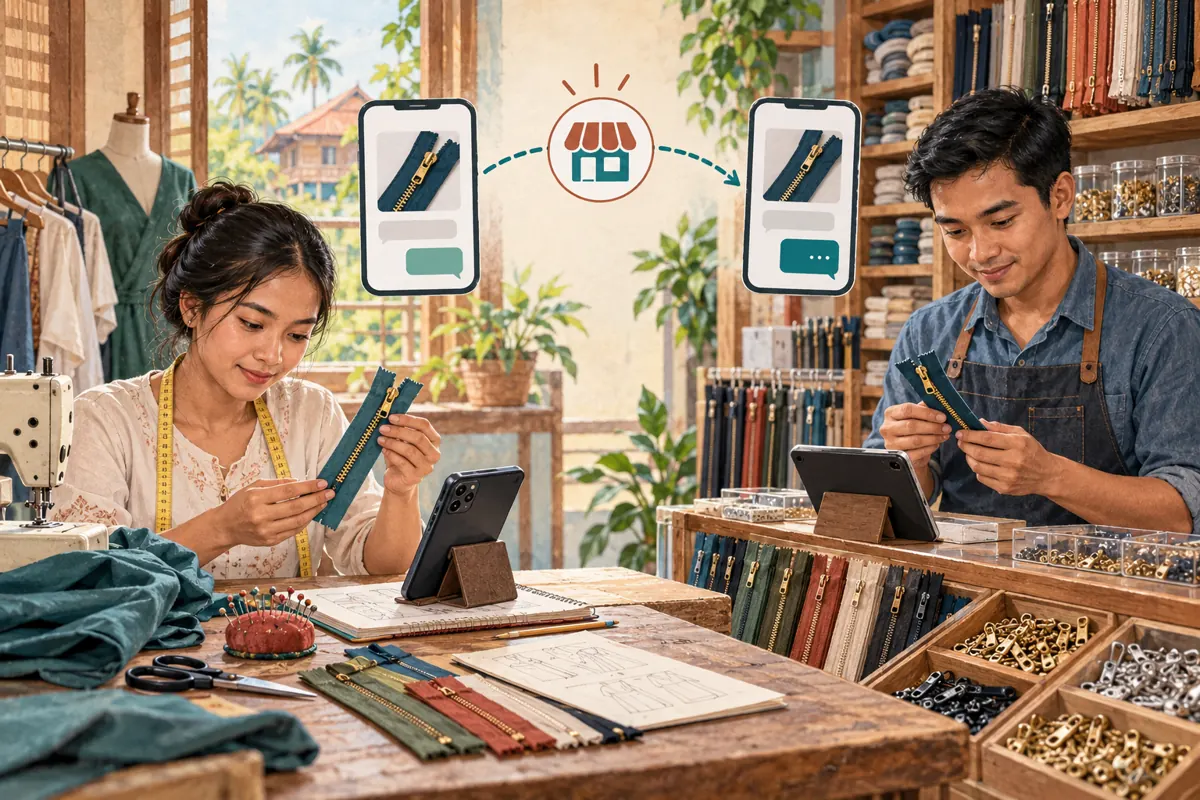
Consider a hypothetical Phnom Penh notions shop where Dara photographs zippers, Sreyneang checks stock and Vannak publishes channel updates. A tailor sees a photograph and asks whether the zipper separates completely at the bottom. Vannak’s name under the post identifies its publisher. It does not establish that Vannak inspected the sample or approved its suitability for a jacket.
Before changing Telegram settings, decide what readers actually need to know. If they only need a dependable shop contact, the channel’s identity may be sufficient. If several staff regularly explain different products, visible authorship may help readers follow those explanations. Write the purpose in one sentence: identify the contributor, while directing availability and order questions to the shop. This prevents a display setting from becoming an accidental promise.
2. Understand the three author displays
Telegram’s official channel documentation distinguishes three arrangements: posts under the channel identity, posts with a non-linked text signature, and posts displaying the author’s profile. The plain signature provides attribution without itself becoming a profile link. Profile-based authorship creates a different reader experience because the sender’s profile is connected to the message.
Telegram’s Super Channels announcement describes enabling Sign Messages and Show Authors’ Profiles under Channel Settings, then Administrators. It also explains that administrators can choose a posting identity using the profile picture beside the message bar. Treat these as separate decisions: enabling author profiles and selecting the identity for a particular post. The official technical documentation confirms the distinction between signature-only and profile-linked modes. Exact screen wording may differ across clients, so verify the result in the app your team uses.
3. Choose a display that fits your staffing
Use the channel identity when announcements represent a shared shop position and staff rotate through the publishing task. This works well for routine opening notices or catalogue updates, provided customers have a clear enquiry route. Keep an internal record of the publisher even when the public post does not identify that person.
Choose a plain signature when attribution helps readers distinguish contributors but linking personal profiles adds little value. Consider linked author profiles when a staff member intentionally presents product explanations under their own identity and understands the public connection. Discuss this with the person before enabling that workflow. Review their visible profile information together. A name displayed beside a product explanation should never imply credentials, checking responsibilities or authority that the contributor does not actually have.
4. Separate publishing from product approval
Create a short internal note for each stock announcement. Record the product reference, the sample photographed, the person who checked the description and the person who will publish it. For zippers, useful checks include whether the bottom separates, what length was measured, which colour the photograph represents and whether the pictured slider is included. These are shop checks, not features that Telegram performs.
In the hypothetical shop, Sreyneang might confirm that the photograph shows a closed-end sample while Vannak prepares the caption. If the draft says it suits an application requiring a separating zipper, publication pauses until the wording or product is corrected. Vannak’s eventual signature should remain an attribution. The separate checking note explains who confirmed the underlying facts and gives the next staff member somewhere reliable to start when a question arrives.

5. Test the reader’s view before promoting the channel
Use a staff-only test channel to rehearse the intended author arrangement. Publish a harmless sample message, then have a colleague inspect it as an ordinary subscriber. Ask them to describe what they see before explaining the intended result. Can they identify the shop? Does the name appear as expected? Does tapping the author area open a profile?
Repeat with each staff member who will publish, checking the selected posting identity immediately before sending. When moving the workflow to the public channel, inspect the first suitable real post from a subscriber’s view as well. Do not assume the test channel’s settings carried over. Also inspect older public posts separately; a successful new-post test does not establish how historical messages appear. Record the observed behaviour rather than promising that a setting rewrites the channel’s history.
6. Keep the offer understandable without the author’s name
Write the announcement so a buyer can understand it even if they overlook the signature. Lead with the product distinction, then explain the pictured sample and the next action. A hypothetical caption could say: “Closed-end zipper sample for comparison. Send the required length, colour and a photograph of the item you are repairing to our shop contact. We will confirm the matching option and current availability before accepting an order.”
For Cambodian customers, use the language your actual buyers understand and retain a consistent product reference across Khmer explanations, supplier labels and photographs. Avoid relying on a staff nickname to explain technical meaning. If the post shows several variants, identify them clearly in the caption. A signed but ambiguous photograph still creates extra work, especially when a tailor forwards it to someone purchasing materials on their behalf.
7. Give enquiries a dependable destination
An author profile and an order contact serve different purposes. Decide where the shop wants product enquiries to arrive, then state that destination in the announcement or an easily accessible channel information post. Test the contact route from a buyer’s perspective. If linked author profiles are enabled, explain to staff how they should redirect business questions that arrive personally.
Prepare a small enquiry handover: the original post reference, the customer’s product question, what remains uncertain and who will answer. In the hypothetical shop, Vannak forwards a compatibility question internally to Sreyneang without telling the buyer that stock or suitability is already confirmed. Someone covering the counter can then continue the conversation. The customer should not have to identify the original publisher’s shift or repeat the entire request because a signature led them to an unavailable person.

8. Evaluate SMM services against the actual problem
The supplied catalogue includes the exact public title “Telegram - Channel/Group Members ~ Max 1.5M ~ 3 days No Drop ~ 100k/days ~ INSTANT”. Its title identifies a channel/group membership service, but the brief provides no supporting description. The title’s capacity, timing and retention wording should therefore remain catalogue claims, not independently verified facts or promises repeated in your promotion.
That listing does not establish a service for author signatures, product verification, customer support or Cambodian audience targeting. If your problem is that buyers cannot tell who posted an explanation or where to ask about a zipper, resolve those issues directly. Purchased engagement is not evidence of genuine interest, sales, ad delivery or Cambodian users. A membership count also cannot show that someone understood the distinction between the two zipper types.
Before any service decision, review the available written terms, applicable platform rules, required destination and support conditions. Declining an unsuitable service is a valid outcome. Keep any existing service delivery record separate from your enquiry log so later reporting does not present purchased activity as independent customer demand.
9. Correct the product information, not just the attribution
If staff discover that a published announcement describes the wrong zipper type, stop using it in further promotion until the information is corrected. Assign one person to coordinate the correction and another to confirm the product detail where practical. Make the changed fact understandable to readers who may already have relied on the earlier wording.
Changing an author display would not resolve that mistake. Nor should a colleague’s signature become a reason to avoid answering a customer. Keep the original post reference, the corrected fact and any affected enquiries together internally. Contact buyers with active discussions where the error matters, using the shop’s established communication process. Avoid claiming that everybody saw the correction simply because the channel has subscribers or the message has a view count.
10. Review whether authorship helps customers
After the team has used the workflow across several normal announcements, review actual conversations. Look for recurring confusion about who answers enquiries, whether customers mistake a contributor for the order contact, and whether staff can find the person who checked a product detail. These observations tell you more about the author arrangement than a larger audience total.
Common mistakes include enabling profile links without discussing them with contributors, assuming the selected posting identity is always correct, and treating a visible name as proof of stock approval. Another is creating elaborate public attribution for a shop where one shared contact would be clearer. Keep the arrangement only if it serves a practical purpose. Revisit it when staff responsibilities change, and check that customer instructions still lead to an actively monitored destination.
Frequently asked questions
Does a plain Telegram signature link to the administrator’s profile?
Telegram distinguishes a non-linked text signature from the mode that displays author profiles. Choose the arrangement deliberately and test a new message as a subscriber. Do not infer the setting from the presence of a name alone; inspect what happens when the author area is tapped.
Should every employee publish under a personal profile?
Only if that arrangement serves the shop and the employee understands the public connection. A channel identity or plain signature may provide enough clarity. Keep an internal publishing record regardless, and make sure customers have a business contact that remains useful when an employee is absent.
Can a signature prove that stock was checked?
No. It identifies authorship within the chosen posting arrangement. Stock confirmation requires a separate operational check. Record the relevant product, who checked it and when, then make availability statements that reflect that check. Do not imply that an author’s name verifies every claim in the caption.
Will a Telegram member service bring Cambodian tailoring customers?
The supplied listing does not establish that outcome. Its description is empty, and membership delivery cannot demonstrate location, purchasing intent or product suitability. Use actual enquiries and confirmed transactions to understand business demand, and keep purchased activity clearly separated from those records.
What if a customer messages the author instead of the shop?
Acknowledge the question and guide the customer to the agreed business contact, preserving the product reference so they do not have to start again. Then review the post’s instructions. Repeated misrouting may indicate that linked profiles are adding confusion or that the enquiry destination is too difficult to find.
Explore the current service catalogue, create an account, or ask a specific question through support tickets.
- Telegram: Channels, supergroups, gigagroups and basic groups
- Telegram: Super Channels, Star Reactions and Subscriptions
- Telegram: channels.toggleSignatures
Prepared with AI assistance. Illustrations explain the workflow and do not represent customer results.