19/10/2026 08:23
What Should New Visitors Watch First? A YouTube Channel Trailer Workflow for Cambodian Fabric Shops

A shopper discovers your fabric demonstration, opens your YouTube channel and wants to understand what else you offer. Will they find useful buying guidance, sewing lessons, wholesale information or only product announcements? A focused channel trailer can answer that question before the visitor starts searching through uploads. For a Cambodian fabric shop, this is a practical promotion task: make the channel’s purpose easy to recognize, then give interested viewers a sensible next step. This workflow uses a hypothetical Phnom Penh shop throughout. It also explains why purchasing subscriber or like counts through an SMM panel cannot replace a helpful introduction or demonstrate local customer demand.
1. Define the visitor’s question before choosing a video
Start with one sentence describing who the channel helps and what they can learn. In our hypothetical shop, the audience is people choosing fabric for everyday clothing, and the channel explains texture, drape and questions to ask before buying. That is a more useful promise than saying the shop has beautiful products. It tells a visitor whether watching another video could help with an actual decision.
Write down the main uncertainty a newcomer brings. Perhaps viewers cannot tell whether the business sells fabric or finished garments. Perhaps they assume every demonstration is a sewing tutorial. The trailer should resolve that uncertainty early. Ask someone unfamiliar with the business to describe the channel after watching the proposed introduction. If their answer differs from your intended purpose, revise the opening before investing in more filming or promotion.
2. Give newcomers and returning viewers different jobs
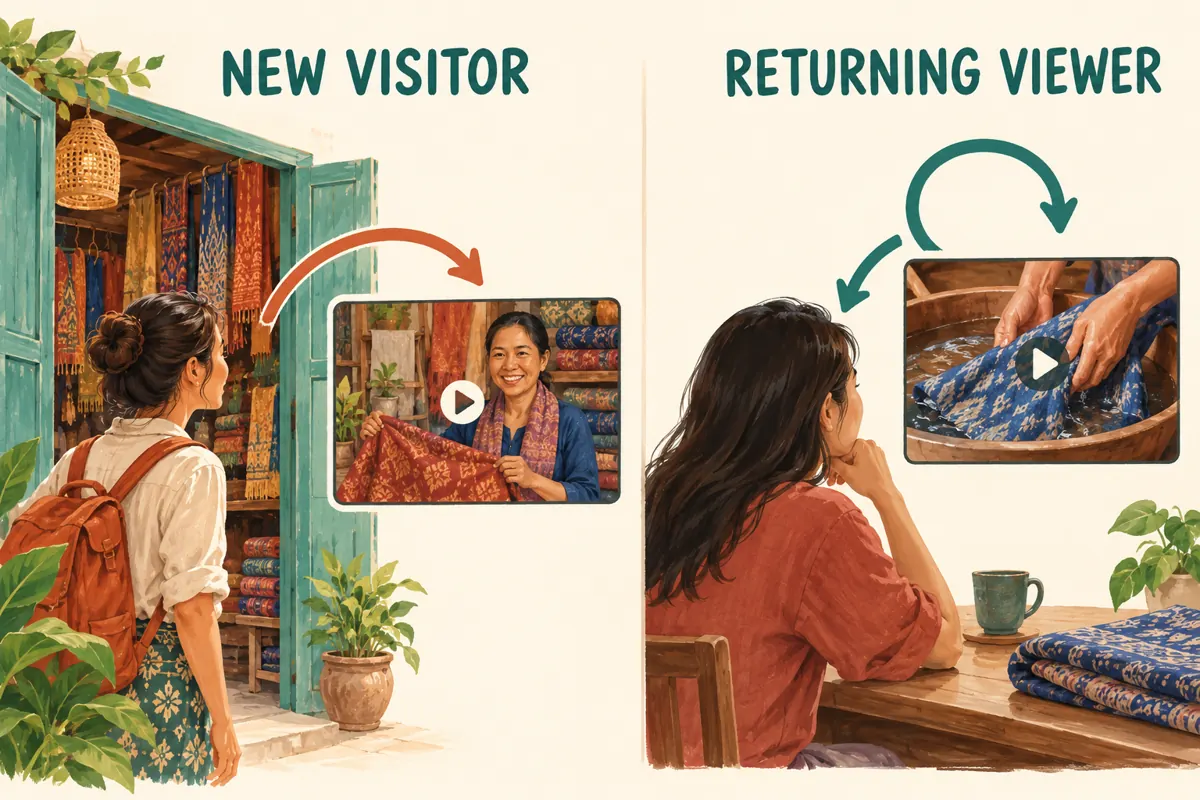
YouTube’s official channel-layout guidance distinguishes a channel trailer for people who have not subscribed from a featured video for returning subscribers. These are placements on the channel Home tab. YouTube also says that once someone watches the trailer or featured video, that video will not be shown to them again in that placement. Keep essential business information available elsewhere rather than relying on one introduction.
For the hypothetical fabric shop, the newcomer needs orientation: what the shop does, which questions its videos answer and where to begin. A returning viewer may instead benefit from a recent explanation of fabric care labels. Plan these as different editorial assignments. The welcome video should remain useful across several product arrivals, while the returning-viewer selection can change when the shop publishes a particularly relevant demonstration. Neither selection needs to be the upload with the largest visible count.
3. Audit existing footage before filming a new introduction
Review a small selection of existing videos and ask whether any already introduces the channel accurately. Check the opening, the claims made about products and the final instruction. A calm demonstration that explains the shop’s approach may work better than a polished seasonal announcement containing an expired offer. Reject footage that implies an unavailable service, such as tailoring or nationwide delivery, unless the business actually provides it.
Use three decisions: use as it stands, make a separate edited introduction, or film a new one. Reuse an existing video only when viewers do not need extra context to understand it. Create a new edit when the useful explanation is buried inside unrelated material and you have the original footage and permission to reuse it. Film again when the business has changed enough that editing would leave a misleading impression. Record the reason for your choice so later replacements have a clear standard.
4. Build the trailer around recognition, usefulness and a next step
Organize the introduction into three parts. First, show what the business is. Second, demonstrate the kind of explanation viewers can expect. Third, suggest one useful action. For the hypothetical shop, that could mean showing the fabric counter, comparing how two samples hang, then inviting viewers to watch a beginner’s fabric-selection guide. This gives the trailer substance without trying to teach an entire buying lesson.
A hypothetical English planning script could read: “We sell fabric in Phnom Penh and explain the details that are difficult to judge from a product photo. Our videos show how samples move and which questions to ask before choosing. Start with our fabric-selection guide, and contact the shop to confirm current availability.” Adapt the spoken version to the language customers actually use. Remove any sentence that promises expertise, stock or support the business cannot substantiate.
5. Film details that explain the shop accurately
Choose a quiet filming period and a background that makes the business recognizable. Show fabric at a useful distance, then include a close view of the feature being discussed. If the speaker describes drape, show the sample hanging or moving naturally. If they discuss comparing textures, explain that a screen cannot reproduce touch. The purpose is to help viewers understand what a demonstration can and cannot tell them.
For Cambodian customers, use familiar buying situations without assuming everyone has the same needs. A customer selecting fabric for a work outfit may ask different questions from someone buying material for a family celebration. Pick one situation for the trailer and leave the others for later videos. Avoid presenting patterns or appearances as proof of fiber composition or origin. Check those statements against reliable product information, and keep customer receipts, private messages and identifiable bystanders out of the shot.
6. Make the invitation useful after the first viewing
A trailer should invite an action that remains understandable when someone encounters it outside its intended placement. Name the next video clearly instead of saying only “watch this.” Explain what the viewer will learn there. If the invitation is to contact the shop, state what information helps staff respond, such as the intended garment and approximate quantity. Do not ask customers to place personal contact details in public comments.
Keep changing details out of the spoken introduction where possible. A temporary discount, holiday closure or particular roll’s availability can make an otherwise useful trailer obsolete. YouTube’s channel-customization guidance places the channel description and site links under Profile, separate from Home-tab organization. Use those maintained information areas thoughtfully, and check their accuracy. The introduction can describe how to confirm availability without promising that every sample shown will always be in stock.
7. Assign the selected videos in YouTube Studio
On desktop, YouTube’s documented route is YouTube Studio, Customization, then Home tab. Enable the Home tab if necessary. Under Layout, choose ADD section and Channel trailer, select the intended video and click Publish. For returning subscribers, use ADD section and Spotlight, choose the featured video and publish the change. Consult the official layout guide if the interface differs from what you see.
Before making the selection, compare the thumbnail and title with your approved recording. Similar drafts can be difficult to distinguish, especially if one contains outdated contact instructions. Keep a simple assignment note stating which video welcomes newcomers and which serves returning viewers. The business owner or an authorized channel operator should perform the account changes. An editorial draft or an SMM service listing is not a reason to provide another party with a password or verification code.

8. Review comprehension rather than treating a preview as proof
After setup, check the selected videos and public channel presentation on a phone and a larger screen. Remember that subscription status and previous viewing affect the intended placements, so one person’s screen is not a universal preview. Review the underlying video directly as well. Listen for unclear speech, watch whether fabric details remain visible and confirm that the closing instruction matches an available resource.
Ask a colleague who did not write the script three questions: What does this business offer? What would you watch next? What would you need to confirm before buying? Record their actual answers rather than a general “looks good.” In a hypothetical review, a colleague might think the shop offers sewing classes because the trailer spends too long showing a sewing machine. That observation suggests replacing the distracting footage. It does not require a larger promotion budget or a claim that the trailer has failed with all viewers.
9. Apply a policy check before considering panel engagement
The supplied catalogue includes “YouTube Subscriber ~ Max 10k ~ 50-150/days ~ Instant ~ 𝗥𝗘𝗙𝗜𝗟𝗟 30D”. Its title identifies a subscriber-related listing, but the supplied description is empty. The wording does not establish how delivery works, who participates, whether anyone is Cambodian or whether the advertised conditions are reliable. Treat the full title as a catalogue identifier, not verified evidence of quality or suitability.
YouTube prohibits artificial inflation of views, likes and other metrics, and its fake-engagement policy warns that a hired promoter’s actions can affect the channel. Reject proposed methods that artificially inflate engagement. Purchased engagement is not evidence of genuine interest, sales, ad delivery or Cambodian users. For this workflow, direct effort toward a clear introduction and voluntary viewing by people who want the information. A subscriber order cannot show whether someone understood the shop’s purpose or found the next explanation helpful.
10. Set replacement triggers and avoid common mistakes
Give one person responsibility for checking the trailer when the business changes. Useful replacement triggers include a new product focus, a changed contact route, the end of a service or a better explanation of the channel’s purpose. A different camera or a newer upload alone is not a strong reason to replace an introduction that remains accurate. Keep a short note explaining what changed and why the replacement serves newcomers better.
Common mistakes include opening with a long logo sequence, choosing a trailer because it has the biggest count, confusing a temporary sale with the channel’s enduring purpose and asking for several actions at once. Another mistake is reading every later enquiry as proof that the trailer caused it. If a customer voluntarily mentions the introduction, record that limited observation. Use repeated, specific misunderstandings to guide edits, while recognizing that a few conversations cannot establish a broad performance result.

Frequently asked questions
Does a small fabric shop need a professionally produced trailer?
No elaborate production is necessary for this workflow. Clear speech, accurate information and a useful demonstration matter more than decorative transitions. Start with available equipment and a quiet location. If the footage cannot show the relevant fabric detail clearly, improve that particular shot before spending on a complete production package.
Can the same video introduce the channel and serve returning subscribers?
It can be an editorial choice, but check whether it serves both needs. A general welcome may tell a returning viewer very little. When suitable content exists, use the returning-viewer selection for a useful demonstration and keep the newcomer introduction focused on understanding the channel.
Should the trailer be in Khmer or English?
Choose based on the customers the shop intends to help and the language staff can explain accurately. A shop serving mainly Khmer-speaking customers should not switch to English merely to appear international. If serving both groups, prepare a carefully reviewed translation or supporting captions rather than mixing languages without a clear purpose.
How long should the introduction be?
Use the time needed to establish the business, demonstrate the channel’s usefulness and explain one next step. Treat length as an editing decision, not a promised algorithm advantage. Remove repeated greetings, unrelated product lists and explanations that belong in a separate guide.
What should the shop do if enquiries remain unchanged?
First check whether the introduction is accurate and understandable. Then consider whether interested people are encountering the channel and whether the next resource answers their questions. An unchanged enquiry count does not identify the cause. Avoid compensating with purchased engagement, which cannot establish customer interest or validate the trailer.
Explore the current service catalogue, create an account, or ask a specific question through support tickets.
- YouTube Help: Customize your YouTube channel layout
- YouTube Help: Channel customization
- YouTube Help: Fake engagement policy
Prepared with AI assistance. Illustrations explain the workflow and do not represent customer results.