22/10/2026 16:23
Tassel, Braid or Fabric Loop? TikTok Photo Alt Text for Cambodian Curtain-Accessory Shops
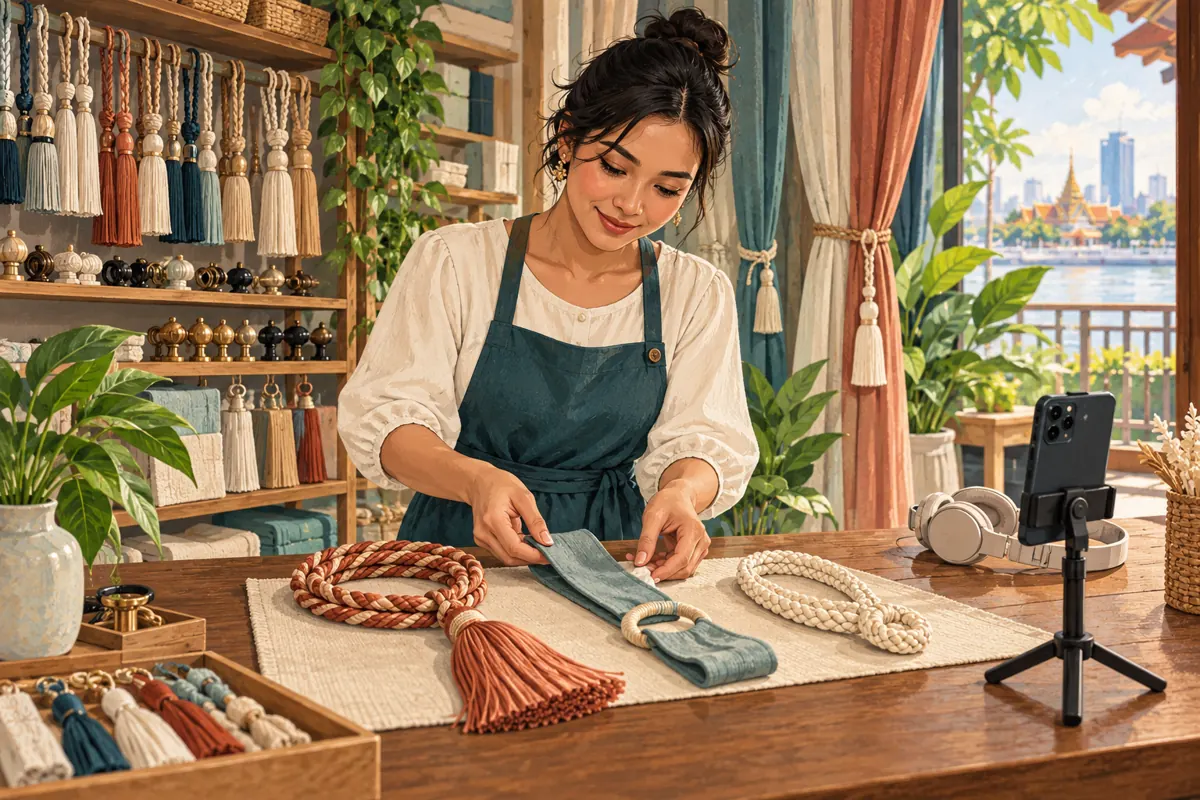
A curtain tieback can look attractive in a TikTok photo without being easy to identify. A buyer may need to distinguish a twisted cord from a flat fabric loop, or understand whether the pictured tassel belongs to the item being offered. For Cambodian shops promoting small accessories, those details deserve the same attention as lighting and presentation. This guide explains how to prepare useful photo alt text, review it by listening and keep accessibility checks separate from engagement counts. The shop situations and sample descriptions below are hypothetical examples, not customer results or claims about particular products.
Start with the difference a buyer needs to understand
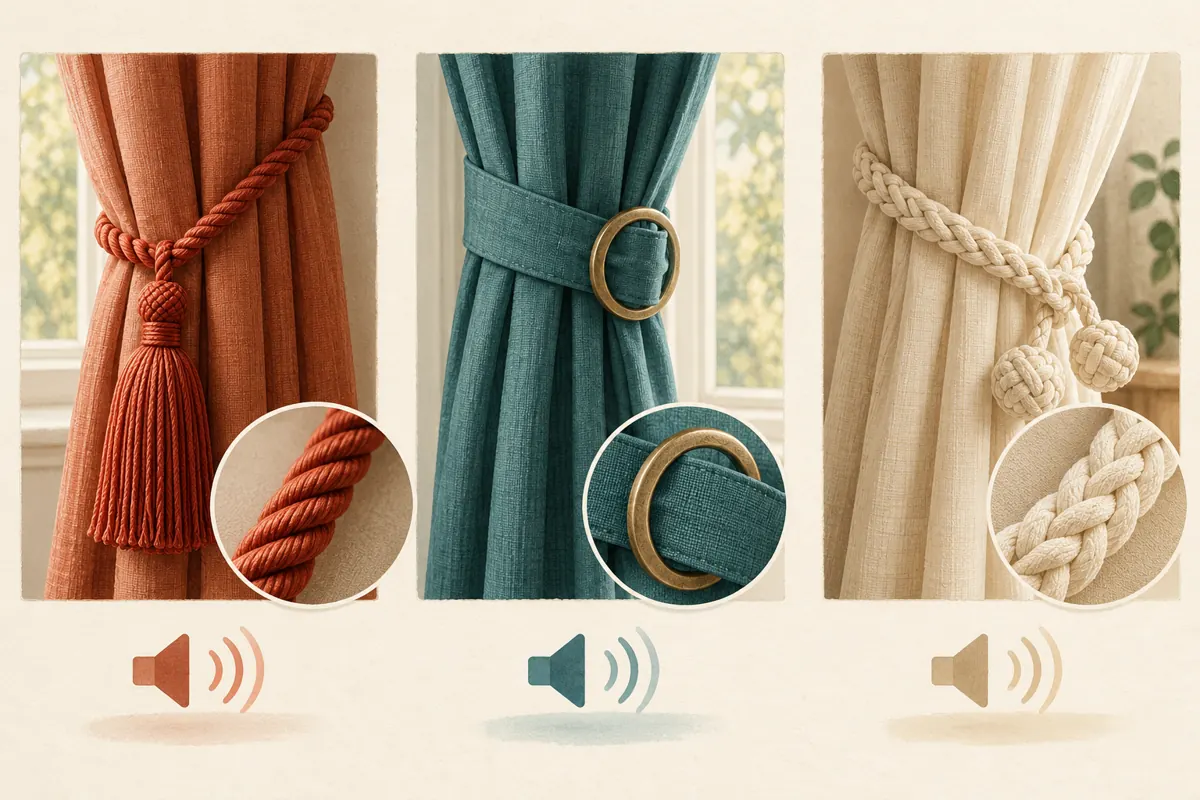
Imagine a hypothetical Phnom Penh curtain shop preparing a photo post featuring three tiebacks. All three are photographed against cream curtains, but their construction differs: one has twisted cord and a tassel, one uses a flat fabric band, and one has a braided body with knotted ends. A description such as “beautiful curtain accessories” leaves the most useful differences unexplained. Before writing anything, decide what a person should understand from each photograph.
Make a short working note for every image: the product shown, its distinguishing visible feature and the relationship between any objects. For a close-up, the relationship might be a loop resting over a wall hook. For a display photograph, it might be a tieback wrapped around gathered curtain fabric. This preparation also exposes weak photographs. If staff cannot identify the important detail, change the framing before trying to explain it in words.
Give alt text and the post caption separate jobs
TikTok's official accessibility announcement says creators can add alternative text to photo posts during upload or after publication. It describes this feature as a way to make photos accessible through screen readers. That is the foundation of this workflow: provide a meaningful description of the image for someone who may not see it clearly. The announcement is linked in the sources.
Use the ordinary post caption for the offer and the next action: what the shop sells, whether accessories are sold separately and what information someone should send when enquiring. Use alt text to explain the visual content. Some overlap is reasonable when an image contains essential product information, but copying a long sales caption into every image description creates repetition. A reader should learn something specific about each photograph instead of hearing the shop's promotional message again.
Photograph details that words can describe accurately
Prepare a simple photo sequence: a complete view of the accessory, a close-up of the relevant fastening detail and a view showing how it sits against curtain fabric. These are suggested editorial choices, not TikTok requirements. Use a background that separates the product from its surroundings. Keep unrelated hooks, packaging and spare accessories outside the frame unless their relationship is part of the explanation.
Check what the image can actually establish. A visible woven surface does not establish the fibre composition. A shiny round fitting does not establish that it is a magnet. A tieback holding one sample curtain does not prove suitability for every curtain weight. Confirm materials and compatibility separately using reliable product information. In the image description, describe the visible shape, arrangement and texture without turning appearance into an unsupported technical claim. When the fastening mechanism matters, show it clearly in another photograph.
Write descriptions that distinguish the samples
For the hypothetical twisted-cord sample, a useful draft is: “Rust-coloured twisted curtain cord with a long tassel, wrapped around a gathered cream curtain.” For the fabric sample: “Flat teal fabric tieback passing through a round buckle around a gathered curtain.” For the braided sample: “Cream braided tieback with knotted ends hanging beside the gathered curtain.” Each description identifies a different structure and explains where the accessory sits.
Treat these as writing examples, not text to paste beneath unrelated products. Start with the object, add the feature that distinguishes it and include positioning when it helps comprehension. Colour can be useful, but it should not carry the entire distinction. Avoid vague praise such as premium, elegant or perfect. If several products appear together, describe their order and differences. If only a fastening close-up appears, say so rather than describing the whole product as though it were visible.
Handle Khmer, product codes and image text deliberately
An English editorial guide does not mean a Cambodian shop should publish all its customer descriptions in English. Choose the language that serves the intended audience, and ask a fluent reviewer to check product terminology. Keep genuine product codes consistent across the photo, caption and enquiry record. A code should help identify the item; it should not replace a description of what the item looks like.
When a photograph contains meaningful writing, decide what the listener needs to hear. A label distinguishing a single tieback from a pair may be essential. A decorative slogan usually adds little. Put important buying conditions in the ordinary caption as well, so they are not confined to lettering inside a picture. Test pronunciation of unfamiliar codes and mixed-language terms on the device used for review. Do not assume that a description sounds clear merely because its spelling looks correct.
Match every description to the final photo
Keep a working sheet with one row per photograph: a small reference thumbnail, its intended position, its description and the reviewer responsible. Complete this pairing after cropping and selecting the final images. A description written for an earlier photograph may mention a tassel that the final crop removes, or a fastening that now appears on the opposite side.
During preparation in TikTok, look for the alternative-text control available in the photo-post interface and enter the matching description for each image. Follow the field's current limits rather than treating a remembered character allowance as permanent. Save the entries and revisit them where the interface allows. TikTok confirms that alt text can also be added after publication, so an omission need not become a permanent gap. If you cannot locate the control, consult TikTok's accessibility guidance and retain the prepared descriptions for correction.
Run a listening review with a concrete task
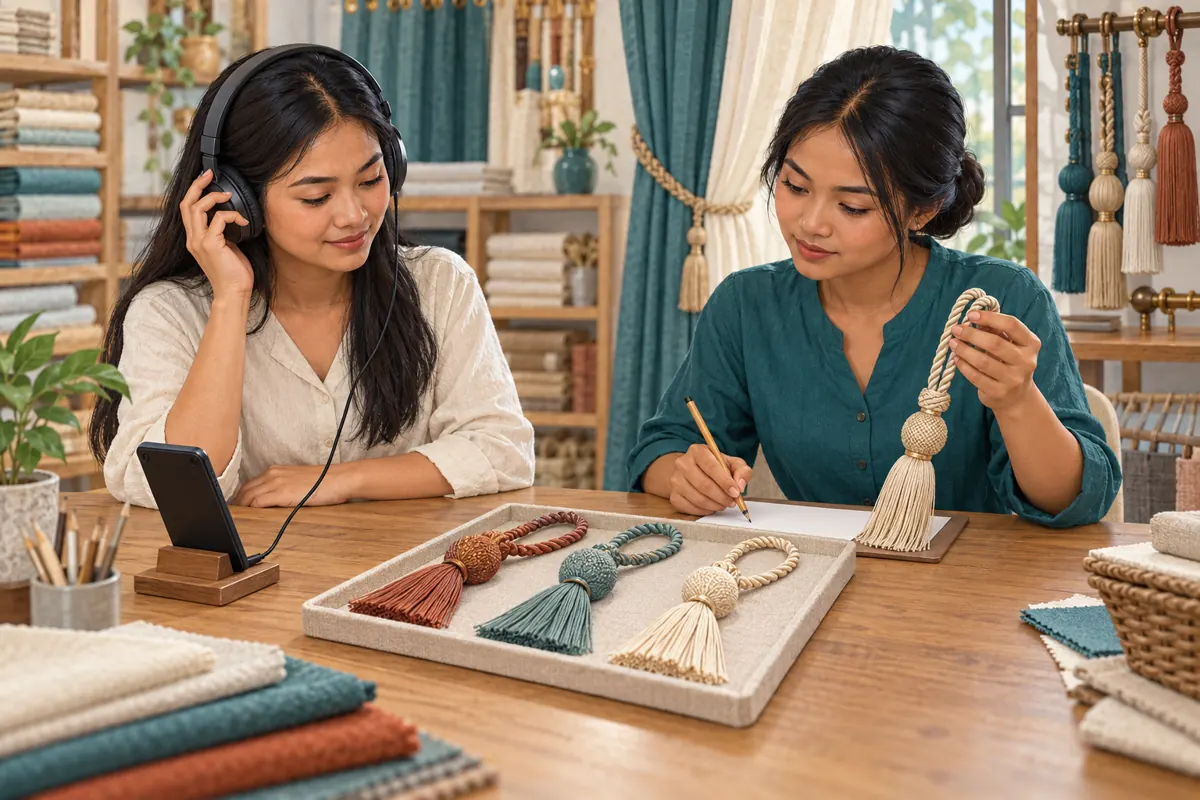
Ask a colleague to listen to the descriptions without looking at the photographs first. Give them a specific question: which accessory has a flat band, which has a tassel, and which picture shows the fastening? This is more informative than asking whether the wording sounds nice. Their answers reveal whether the descriptions preserve the distinctions the post is meant to communicate.
Then test the actual published experience with a screen reader, where practical, including movement between photos and the surrounding caption. A read-aloud rehearsal checks wording; a device test checks what is presented in that environment. Record any missing description, confusing repetition or unexpected pronunciation. This small internal review does not establish universal accessibility. It gives the shop concrete problems to fix, while feedback from people who routinely use assistive technology can reveal needs the team has missed.
Keep SMM catalogue claims out of the clarity test
An SMM panel listing cannot tell you whether a listener understands a curtain accessory. One supplied catalogue title is “TikTok - Likes ~ Bot ~ Max 500k ~ 100k/Days ~ Instant ~ 𝐍𝐎 𝗥𝗘𝗙𝗜𝗟𝗟”. Its category concerns TikTok likes, and its description field is empty. The wording is a catalogue label, not independent verification of delivery speed, capacity or conditions. It provides no supported basis for claiming an accessibility benefit.
TikTok's official explanation of deceptive behaviour says it prohibits fake engagement, including marketing services that artificially increase engagement. For this workflow, do not purchase artificial likes as a promotion step or as a test of whether the descriptions work. Purchased engagement is not evidence of genuine interest, sales, ad delivery or Cambodian users. A service record and a content-quality review answer different questions. Keep the review focused on whether someone can identify the product and understand the next step.
Use a clear publish, revise or pause decision
Proceed when every final photograph has a matching description, the important differences are understandable and the caption explains the offer accurately. Revise when the description is vague, repeats promotional language or names details outside the frame. Pause when nobody can confirm what the photograph shows, or when the offer depends on an unresolved fact such as whether the pictured hook is included.
In a hypothetical review, a colleague hears “fabric loop with round buckle” and assumes the wall hook comes with it. That response does not automatically mean the alt text is wrong: the caption may have failed to explain the package contents. Check both parts before changing either. Add a clear inclusion statement based on confirmed stock information, and photograph the accessory separately if the display creates confusion. Resolve the source of the misunderstanding instead of adding increasingly long qualifications to every image description.
Correct recurring mistakes and learn from real questions
Common mistakes include repeating the same description across different photos, relying entirely on colour, filling the field with search terms and assuming a textured appearance proves material quality. Another is leaving an old description attached to a newly selected image. Make the final photo-to-description comparison part of the publishing handover, with one person responsible for checking the pairings.
After publication, note the questions that reveal missing information. “Does the tassel come attached?” suggests a different content need from “Do you deliver to my area?” Use the first to improve the product explanation and the second to improve ordering information. Keep these observations modest: a question is evidence of what that person asked, not proof of how everyone interpreted the post. When reviewing the next photo set, use the actual confusion to choose a clearer angle, a more precise description or a better caption.

Frequently asked questions
Should every photo in a post have the same alt text?
Write descriptions that reflect what each photo contributes. A full product view and a fastening close-up provide different information, even when they show the same accessory. Reusing the product name is reasonable, but repeating the entire description hides the reason for including another image. Remove a redundant photograph if it adds nothing useful.
Should prices and delivery information go in alt text?
Keep the offer and ordering conditions in the ordinary caption. If important price or package information is visibly embedded in a photograph, make that meaning accessible too. Avoid adding unrelated sales details to every description. Review changing information carefully so the image, caption and shop's current offer remain consistent.
Can a shop describe an unseen fastening from product knowledge?
Use the image description to explain what the photograph shows. Put verified specifications elsewhere in the post, and add a photograph of the fastening when buyers need to understand it. Otherwise, a listener may reasonably believe the mechanism is visible in that image when it is actually hidden behind the curtain.
What if the team has no experienced screen-reader user?
Begin with a colleague reading the descriptions aloud while another person answers product-identification questions without viewing the photos. This checks the language but does not replace testing the app with assistive technology. Learn the device's accessibility controls or seek a willing reviewer with relevant experience; do not describe an untested post as fully accessible.
Will better alt text guarantee more enquiries or reach?
No. The immediate purpose is to make the visual information understandable to people using image descriptions. Whether someone enquires also depends on their needs, the offer and practical buying conditions. Review clarity through listening and product questions, and assess enquiries separately. Neither a larger like count nor a purchased engagement total demonstrates comprehension.
Explore the current service catalogue, create an account, or ask a specific question through support tickets.
- TikTok: Celebrating Global Accessibility Awareness—Building an Accessible and Inclusive TikTok
- TikTok: How TikTok counters deceptive behaviour
Prepared with AI assistance. Illustrations explain the workflow and do not represent customer results.