20/10/2026 07:22
Can Others Reuse Your Clasp Demo? YouTube Remix Permissions for Cambodian Jewellery Workshops
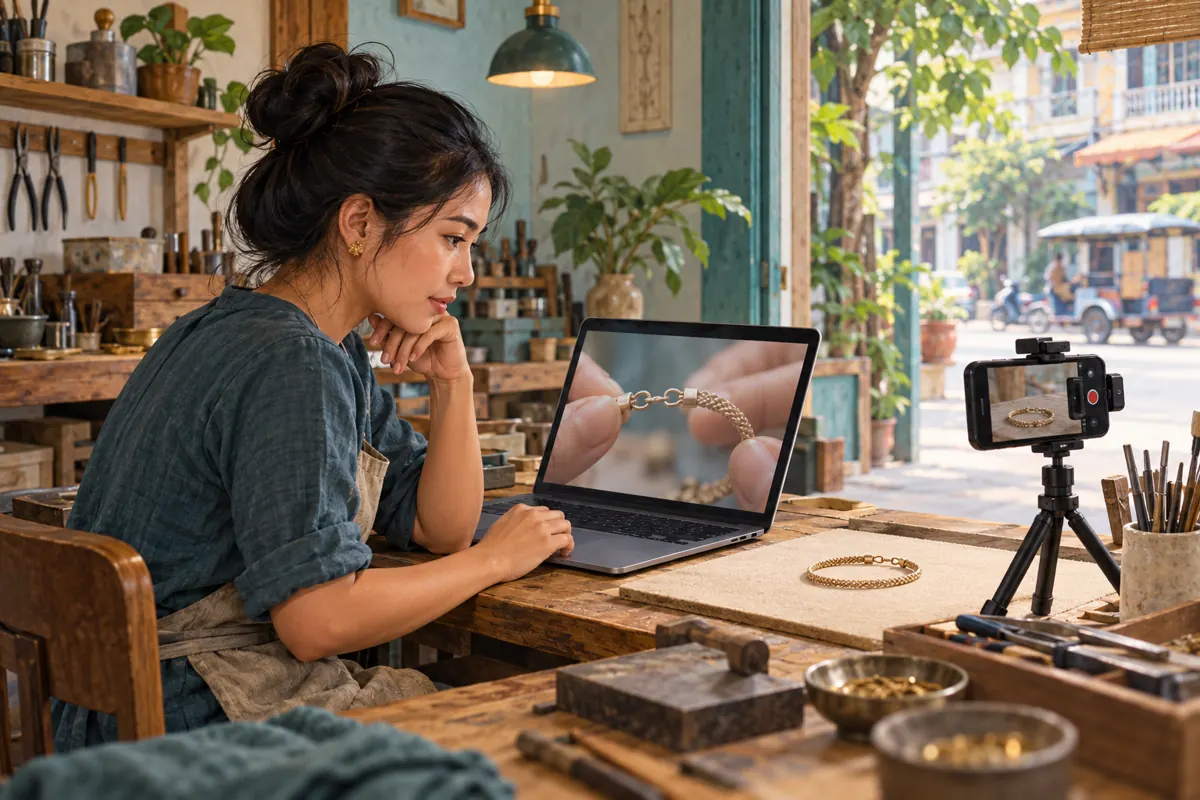
A bracelet demonstration can explain something a product photograph cannot: where the clasp opens, how the fastening moves, and what the customer should look for. A Cambodian jewellery workshop may welcome other creators discussing that demonstration. The decision becomes harder when the footage also contains a customer's commission, a private conversation, or a product claim that needs its surrounding explanation. Before promoting the video, decide whether its picture and sound are suitable for reuse. This workflow helps a small shop make that decision deliberately, record the selected setting, and judge subsequent attention without confusing platform activity with enquiries or sales.
1. Choose the demonstration before choosing the permission
Start with one practical customer question. For a clasp demonstration, that might be: how can someone identify the opening point without pulling the chain? Choose a sample that clearly illustrates the answer. Clear the filming surface of order slips, packaging labels and unrelated commissions. A simple demonstration is easier to review because every visible object has a purpose.
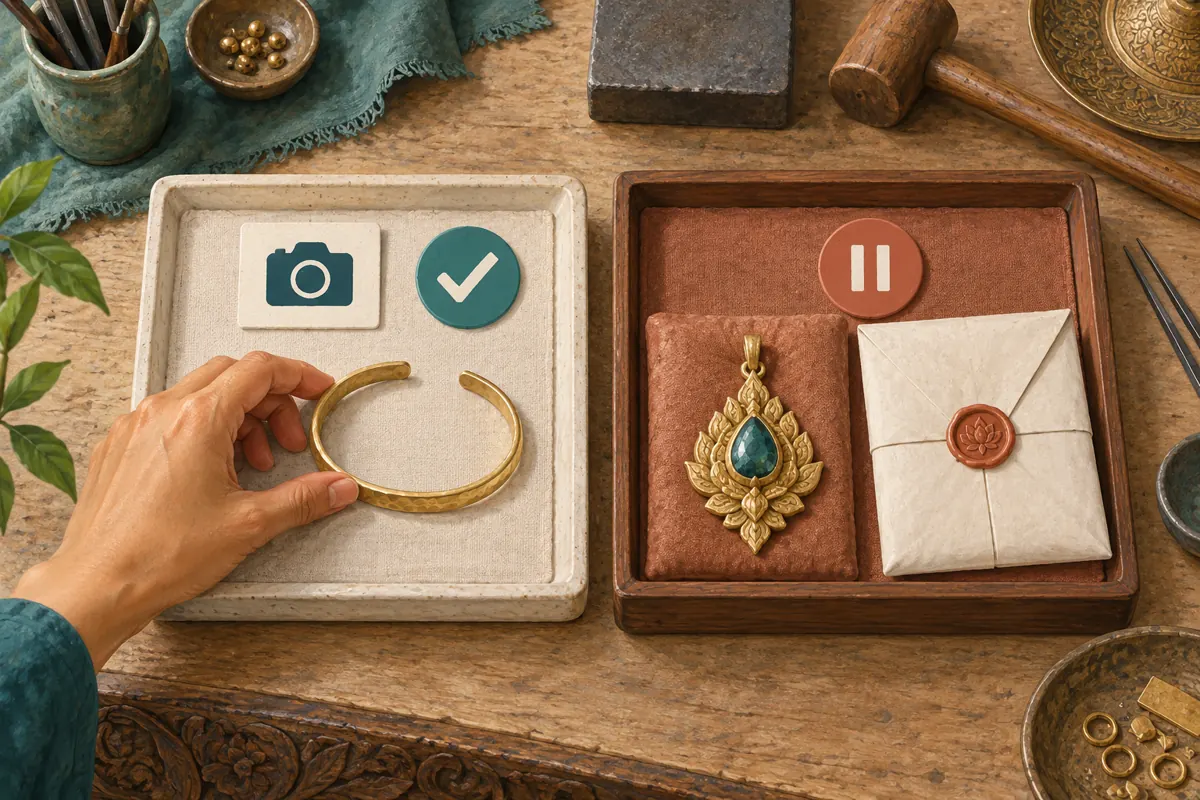
In a hypothetical Phnom Penh workshop, the owner has two possible recordings. One shows a plain sample bracelet on a neutral cloth. The other shows a personalised wedding piece while staff discuss its collection arrangements. The first is a stronger candidate for a reusable demonstration. The second needs a fresh recording before public promotion. This decision concerns the footage itself; adjusting a reuse setting does not make a private detail appropriate to publish.
2. Understand what the remix setting controls
YouTube's official guide, Create YouTube Shorts with remixed content, explains that creators can reuse eligible audio or video through its Shorts tools, with attribution to the source. Shorts are automatically opted into remixing. Ordinary creators can opt their Shorts out of video remixing; the guide distinguishes additional audio controls available to partners using Studio Content Manager.
Treat that distinction as a reason to inspect the actual options on the selected upload. Do not write a team instruction promising that one switch disables every kind of reuse. Also separate your editorial decision from your business hopes. Allowing a demonstration to circulate might help someone discover the workshop, but it does not establish that the resulting audience wants jewellery, lives in Cambodia, or understands which business supplies the item. The useful question is whether the material remains suitable when another creator adds a new context.
3. Review the picture and sound separately
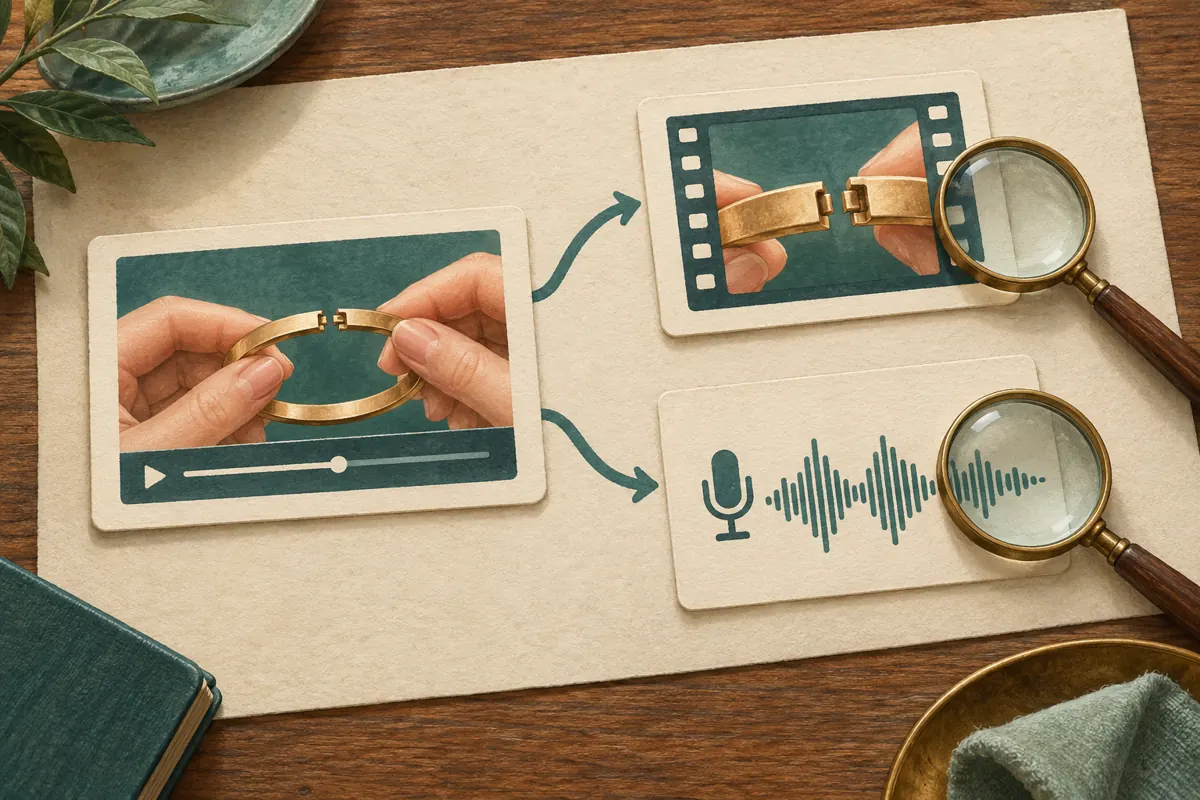
Watch the demonstration without sound first. Look for engraved names, reflections, staff identification, paperwork and distinctive customer designs. Then listen without watching. A recording that looks anonymous may still include a customer's name or an employee discussing a quotation. Ask whether the narration makes sense independently of the object being shown.
For the hypothetical workshop, a sentence such as 'this opening method applies to the sample clasp shown here' gives more useful context than 'all our bracelets work like this'. Have a colleague identify which statement the footage actually supports. If a close-up removes the detail that makes the explanation accurate, record a clearer version. This is especially useful when Khmer narration accompanies a demonstration that may later be discussed in another language: the visible action should support the spoken meaning without relying on an easily missed qualification.
4. Make a decision that staff can explain
Use three practical outcomes: suitable for the available reuse option, suitable for publication with more restrictive reuse choices, or unsuitable for publication until revised. Choose the first when the demonstration is generic, the people involved understand its intended use, and the explanation survives a short excerpt. Consider the second when the full presentation is appropriate but reuse would remove necessary context. Choose revision when the original contains material that should not be public.
Record the reason in ordinary language. For example, 'Generic sample; no customer details; complete clasp action visible' is more useful than 'approved for reach'. Assign one person to resolve uncertain cases. A busy counter assistant should not have to infer whether an engraved pendant was cleared for promotion. Keep customer-specific footage outside the reusable asset selection until the workshop has resolved its intended use.
5. Save and verify the setting on the correct upload
YouTube's documented route is YouTube Studio, Content, the selected video, Show more, then Shorts remixing. Choose the available preference and save. Check the video's identity carefully before changing anything: similar thumbnails can conceal different versions of the same demonstration.
Keep a short record containing the video title, public URL, review date, selected option and reviewer. Reopen the details to confirm the saved choice matches the decision. Record the wording actually displayed rather than an assumed label. If the expected control is missing, consult the official help page before proceeding. For an initial workshop review, handle uploads individually so a generic clasp demonstration does not accidentally receive the same treatment as a customer commission. Any later bulk review should begin with a clearly defined set of videos.
6. Prepare a demonstration that survives a short excerpt
Build each useful action as a small, understandable unit. Show the clasp before touching it, demonstrate the opening movement, then show the result. Keep fingers from covering the important part. Avoid cutting from a closed clasp directly to an open one if the movement is the lesson. A viewer should be able to describe what changed.
Ask a colleague to review a brief excerpt without the rest of the recording. In the hypothetical example, the colleague might mistake a sample bracelet for a current custom order. That reveals a presentation problem worth fixing before promotion. Describe the item as a demonstration sample where appropriate, and avoid suggesting that its appearance establishes material composition or value. Record a new passage if necessary. A reusable teaching moment should answer one question accurately, even when the audience arrives halfway through the broader story.
7. Keep SMM catalogue labels separate from the reuse decision
The supplied catalogue includes the exact public name 'YouTube - Auto Comments ~ Emoji ~ Max 1M ~ 1k-3k/days ~ INSTANT'. Its name presents it as an emoji auto-comment offering, but the brief supplies no description. That leaves its delivery method, account characteristics and other operational details unverified. The wording is a catalogue label, not evidence of customer interest or a recommendation to order.
YouTube's Fake engagement policy prohibits artificial increases in engagement and explains that a hired promoter's actions can affect the channel. Do not use artificial comments to make a demonstration appear endorsed. For this workflow, direct effort toward a clearer recording, an accurate explanation and appropriate sharing with interested viewers. Purchased engagement does not prove genuine interest, sales, advertising delivery or Cambodian users. A panel listing also cannot resolve whether the workshop's footage is suitable for reuse; that remains an editorial decision.
8. Review existing reuse before changing an established video
YouTube warns that restricting remixing, deleting a source, or certain source edits can affect existing remixes. Its guide describes video-remix deletion and audio remixes becoming muted, unlisted and scheduled for deletion. Check the documented consequences before changing a source used by collaborators.
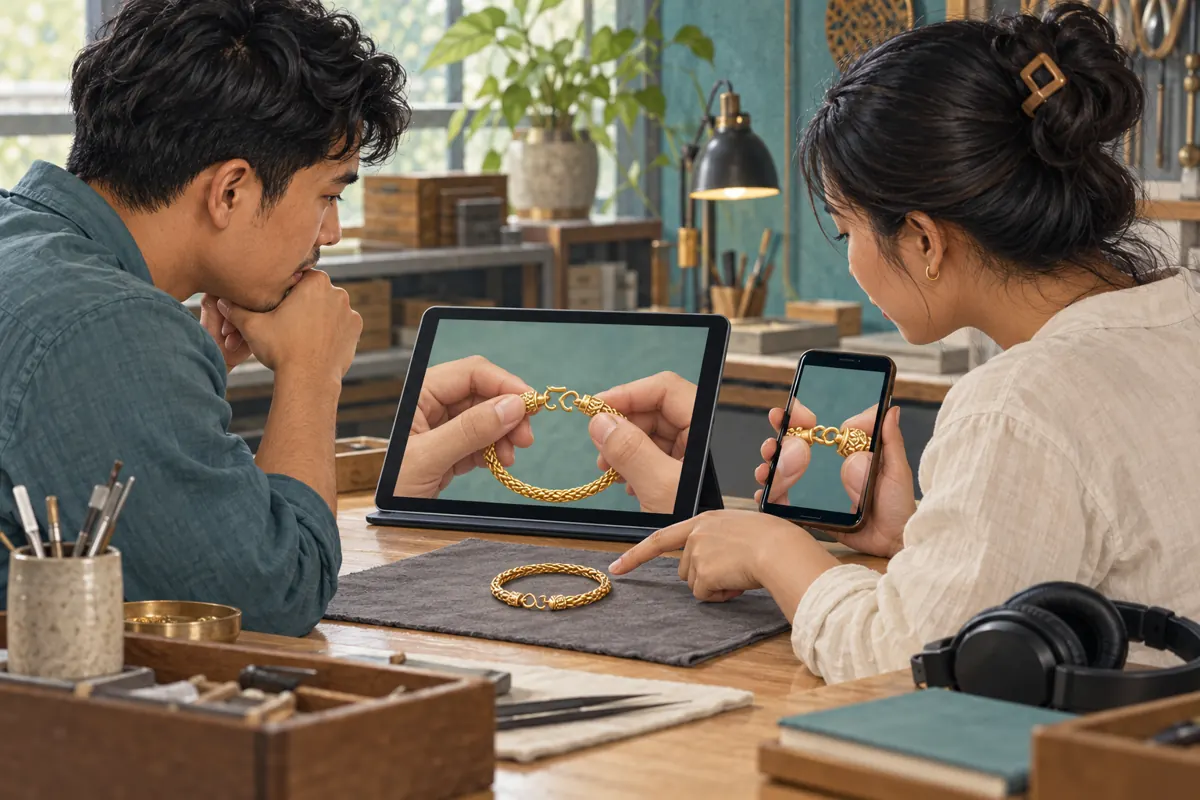
For a hypothetical workshop working with a local jewellery educator, keep a simple dependency note: which demonstration was supplied, who used it, and why a change is needed. If the clasp explanation is wrong, correct the problem promptly and explain the change to the collaborator through your normal working process. If the change is merely cosmetic, consider whether a separate improved recording would serve the purpose. Preserve a private copy of your own approved footage and review notes so staff can understand what changed without relying on memory.
9. Evaluate questions and enquiries alongside viewing activity
Decide what useful attention would look like before sharing the demonstration. For a jewellery workshop, it might be a viewer identifying the correct clasp, asking whether their bracelet uses the same mechanism, or requesting an inspection. Record the actual question and the staff response. Do not turn a friendly reaction into an assumed booking.
Compare questions across review periods using the same categories: explanation understood, clarification needed, service enquiry and unrelated response. These categories are a suggested internal method, not a platform feature. A hypothetical increase in questions about pulling the chain could indicate that the demonstration needs another angle. It would not prove stronger purchase intent. Keep promotion expenses and any service delivery records separate from customer outcomes, and describe uncertainty when a viewer's route to the shop is unknown.
10. Avoid the mistakes that create unnecessary rework
One mistake is reviewing only the thumbnail. The sensitive detail may appear briefly near the end or exist only in the audio. Another is approving an entire folder because its first video is generic. Review each recording against its own subject and context. A third is assuming that attribution means another creator's interpretation is accurate; a source reference does not make every added statement the workshop's statement.
Avoid changing permissions solely because the video has gained attention. Return to the original decision: is the material appropriate for the kind of reuse available? If yes, review what viewers misunderstand and improve future demonstrations. If no, address the specific issue and record the reason. Finish each review by assigning the next action and its owner. 'Reshoot the opening movement with the plain sample' is actionable; 'improve social media' leaves the same uncertainty for the next shift.
Frequently asked questions
Should every jewellery demonstration allow video remixing?
No single choice suits every recording. A generic demonstration can be a reasonable candidate when its meaning survives reuse. A customer commission or an explanation dependent on lengthy qualifications deserves a different review. Decide from the material and the available controls, and record why the choice fits that particular video.
Is a customer's permission to film enough for this workflow?
Clarify the intended uses rather than assuming everyone understands them alike. A customer may expect a private progress update while staff imagine a public demonstration. Explain the proposed publication and reuse context before selecting the footage. When that understanding is unresolved, use a generic shop sample for the promotional recording.
What if staff cannot find the option described in the article?
Confirm that they opened the intended video's details and consult the official YouTube help guide listed in the sources. Record which options are actually available. Do not substitute a different control because its wording sounds similar, or claim a restriction has been applied without checking the saved setting.
Can emoji comments show whether the clasp demonstration worked?
They cannot establish comprehension on their own. A useful assessment asks whether viewers can identify the opening point or describe the movement correctly. Genuine questions can reveal ambiguity. Purchased comments provide no reliable evidence of learning, local demand or sales, and artificial engagement conflicts with YouTube's policy.
What is a manageable first step for a small workshop?
Review one generic demonstration with one colleague. Agree on the customer question, inspect picture and sound, select the available reuse preference, and save a short decision note. Share the approved demonstration appropriately, then use actual questions to improve the next recording. Expand the process only after staff can repeat it consistently.
Explore the current service catalogue, create an account, or ask a specific question through support tickets.
Prepared with AI assistance. Illustrations explain the workflow and do not represent customer results.