19/10/2026 05:28
From Shop Counter to Telegram Channel: A QR Promotion Workflow for Cambodian Retailers
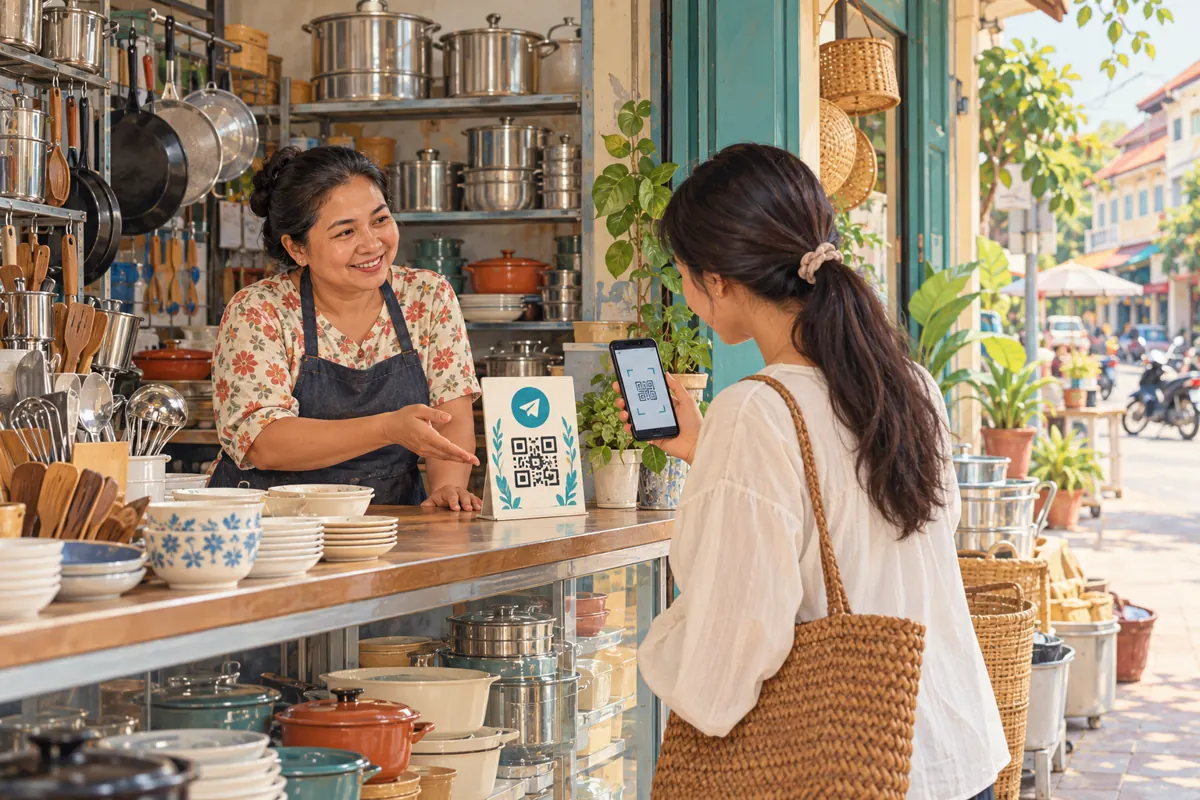
A customer looking at cookware in a Cambodian shop may want future restock updates without making another trip. A small Telegram QR invitation can connect that practical need with the shop’s channel. However, printing a code is only one part of the work. The invitation needs a clear purpose, the destination must match what the customer expects, and staff need a sensible way to assess whether it helps. This guide follows a hypothetical neighborhood kitchenware shop in Phnom Penh, from its first counter card to its review of customer responses. It also explains why an SMM panel service cannot demonstrate that the card attracted interested Cambodian shoppers.
1. Choose one reason a shopper would scan
Begin with a customer need that continues after the visit. For the hypothetical kitchenware shop, that could be learning when replacement pot lids arrive. A broad invitation to follow the business gives the shopper little information. A specific invitation to receive restock updates explains what the channel offers and makes the decision easier.
Write the promise before designing the card. An illustrative English draft is: “See cookware restocks and shop updates on Telegram.” Prepare the actual wording in the language customers comfortably read, with Khmer prominent where appropriate. Only promise updates the team can maintain. If staff cannot reliably publish restocks, choose a smaller commitment, such as occasional product care tips and confirmed opening changes.
2. Decide whether a public channel fits the purpose
Telegram’s Channels FAQ explains that public channels have usernames and can be found through Telegram search. Private channels require an invitation or addition by the owner. For ordinary retail announcements intended for anyone visiting the shop, a public channel can be a practical choice. This workflow assumes the business has deliberately chosen that public destination.
Keep customer-specific material elsewhere. A channel promoted on a counter card should not expose receipts, customer telephone numbers or individual order details. Confirm that its visible identity belongs to the shop and that its content is suitable for public viewing. Telegram’s official explanation of channel types is available at https://telegram.org/faq_channels.
3. Prepare the first useful visit
Imagine scanning the card while standing beside the cookware shelf. The channel should immediately look connected to that shop. Use a recognizable business name and image, then make recent content useful without requiring a long search. A visitor interested in replacement lids should encounter clear product information rather than a sequence of unrelated promotional messages.
For the hypothetical shop, prepare a current restock notice, a short explanation of how to ask about compatibility, and a clear business contact route. State that a shopper should confirm the required size and current availability before traveling. Avoid making the channel sound like an automatic reservation system unless the business actually operates one. The invitation should lead to information staff can honor.
4. Generate the code from the intended channel
Telegram documents QR codes for public usernames, including channels. Its instructions describe opening the QR option beside a username or from the chat’s information page, then sharing or printing the result. Interface details may vary across app versions, so confirm the channel identity before exporting. The supporting feature documentation is https://telegram.org/blog/reactions-spoilers-translations.
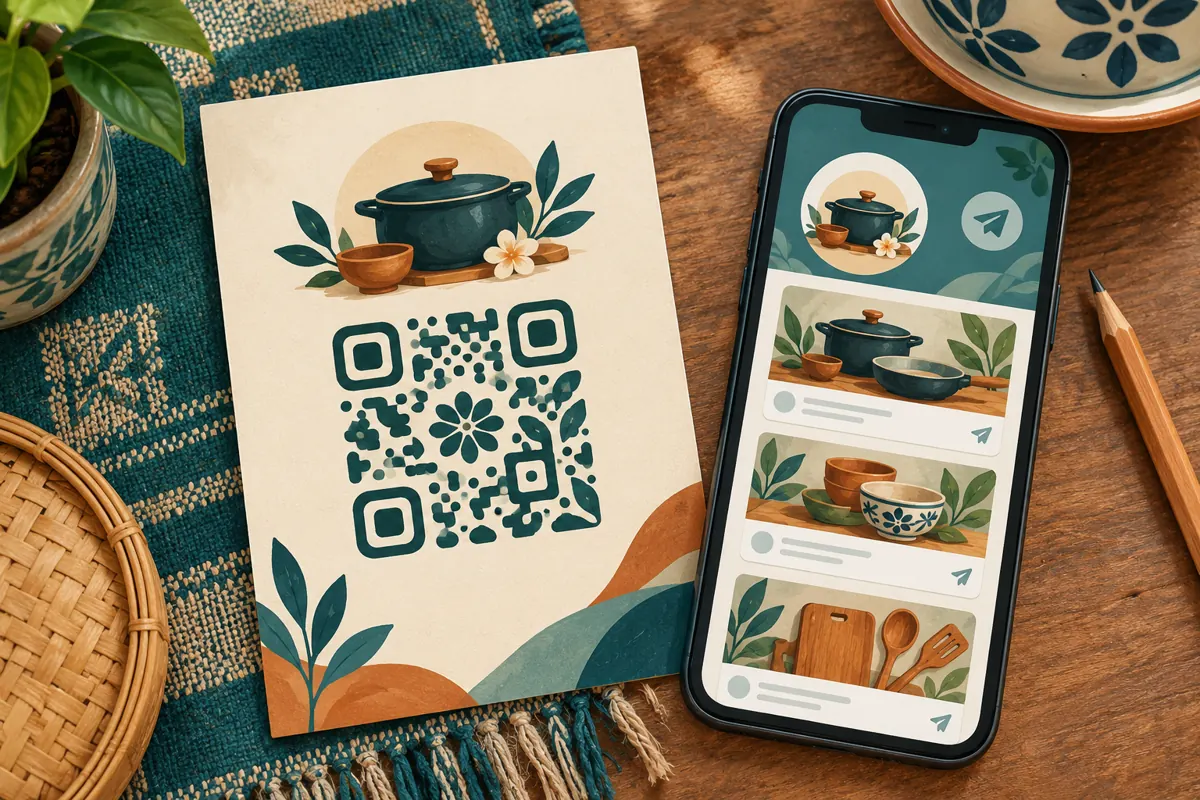
Use the code exported for the shop’s intended destination. Do not select a staff member’s personal profile simply because it is already open on the phone. Save an approved copy of the exported asset alongside the exact destination reference in the team’s normal working records. The illustrations accompanying this article contain schematic QR motifs for explanation; they are not usable channel codes.
5. Design the printed invitation around one action
Build the card around the shop identity, the benefit of visiting the channel, the code and a readable fallback username or address. Keep decorative elements away from the code. Use clear contrast and leave space around it. A customer should understand the purpose without needing a staff explanation, even when the counter is busy.
Separate the channel invitation from payment signage. Two nearby codes without clear labels can create unnecessary uncertainty about what each one does. Give the Telegram card a distinct position and an explicit purpose. Avoid implying that scanning enrolls someone in a discount or reserves an item. If the shop offers a real promotion, explain its conditions separately and accurately.
6. Test the physical card where it will stand
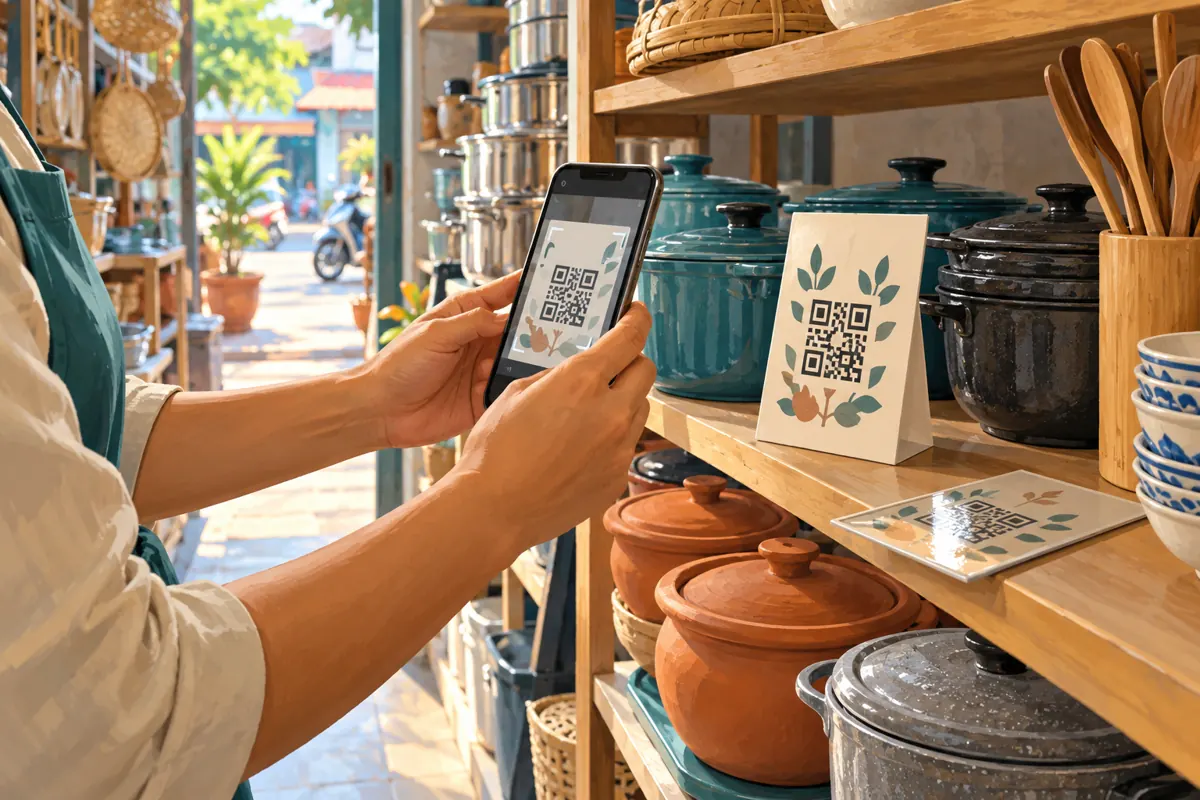
Print a sample before producing a larger batch. Put it in the intended holder and scan it from a customer’s normal standing position. Check daylight, indoor lighting and reflections from any protective covering. A code that works on a designer’s screen may become awkward when printed small, bent around packaging or placed behind shiny plastic.
Ask a colleague who did not prepare the card to test the entire journey on another phone if available. Have them identify the destination and explain what they expect to receive. Record specific problems: glare obscured the code, the channel name looked unfamiliar, or the invitation sounded like a payment request. Fix the relevant problem and repeat that check before distributing cards.
7. Make the staff invitation optional and useful
Introduce the channel when it answers something the shopper has already asked. In the hypothetical scenario, a customer wants a lid that is currently unavailable. Staff can explain that confirmed restocks appear in the channel and point to the card. They should still answer the immediate question and explain any other available way to check stock.
Avoid turning checkout into a forced subscription exercise. Let customers scan on their own devices and decide whether the destination is useful. Keep the card visible without blocking payment or packing. If customers repeatedly ask what it does, improve the wording. Telegram also cautions against sending unsolicited channel links to strangers; this workflow relies on a voluntary invitation in a relevant shopping context.
8. Evaluate SMM panel services against the actual problem
The supplied khmer-mmo.com catalogue includes “Telegram Post Views ~ Max Unlimited ~ 10M/Days ~ INSTANT” in a Telegram post-view category. That identifies the broad service type, but the supplied description is empty. The speed and capacity wording in the title should not be treated as independently verified delivery information or a promise about this shop’s results.
A post-view service does not establish that someone scanned the counter card, lives in Cambodia, needs cookware or intends to purchase. Purchased engagement is also not evidence of genuine interest, sales or official ad delivery. If the problem is that shoppers cannot scan the print, repair the print. If they cannot understand the channel, improve its content. Neither problem calls for purchasing a larger visible count.
Before any panel purchase, identify the exact business question it would answer and review applicable platform rules and documented service conditions. If there is no defensible connection, leave the service out of this campaign. The presence of a catalogue listing does not establish Telegram affiliation or approval. Do not present purchased views as customer endorsements or as proof that the QR invitation works.
9. Observe questions and purchases without inventing attribution
Use a lightweight observation sheet for the card’s location, wording version, test date and recurring customer questions. Staff can note voluntary comments such as a shopper saying they found a restock announcement through the counter card. Record the statement as reported information, without collecting unnecessary identifying details. A customer who says nothing should remain an unknown source.
Keep channel activity, product inquiries and completed purchases distinct. Telegram explains that post views are approximate and include forwarded copies. Therefore, the visible count is not a count of local card scanners. A genuine inquiry is more informative about a need, but it is still not a sale. Confirm purchases through ordinary business records and avoid attributing them to Telegram without supporting information.
10. Change one practical detail before expanding
Review the first placement after staff have had a reasonable opportunity to observe it. If people misunderstand the benefit, change the invitation wording. If they cannot scan comfortably, change the print or position. If they reach the channel but cannot find the promised information, repair the destination. Choose the next action from the observed obstacle rather than from a desire for a larger audience total.
Avoid changing the wording, position and channel content simultaneously when trying to understand one problem. For example, the hypothetical shop might move a glare-prone card from the window to a shaded shelf while retaining its wording. That makes later observations easier to interpret, although a small shop’s informal trial still cannot establish precise causal effects.
Keep a simple list of every printed placement before expanding to bags, receipts or another branch. Recheck those materials when the channel username, business identity or content promise changes. Retire obsolete cards promptly. A reusable invitation earns its place by continuing to send customers to relevant information, not by remaining in circulation after its destination has stopped being useful.

Frequently asked questions
Should the card open the channel or a particular product post?
Choose according to the printed promise. An ongoing invitation for restock updates should lead to a destination that remains useful as inventory changes. A card about one specific product needs information about that product and more frequent review. For this workflow, the channel is the intended destination. Avoid distributing long-lived print that depends on a short-lived stock announcement.
What if a customer cannot open Telegram after scanning?
Keep the readable destination on the card and offer another practical way to obtain the information, such as asking staff or using an existing business contact route. Do not require installation to answer a basic stock question. During testing, note what happens on different devices without assuming every customer will see the same browser or app screen.
Can the shop count scans from the channel’s post views?
No. A post view is a different observation from a scan, and Telegram’s documented count includes forwarded views and is approximate. A larger count cannot identify which printed card someone encountered. Voluntary customer reports can provide useful clues, but describe them as reports rather than complete tracking. Leave the source unknown when there is no supporting information.
Does a small subscriber count mean the invitation is failing?
Not necessarily. A specialist shop may serve occasional needs, and some visitors may read information without becoming regular subscribers. First check whether the code works, the benefit is clear and the channel contains the promised material. Then consider relevant questions and confirmed customer feedback. Buying engagement to make the channel look busy would not resolve those practical uncertainties.
Should the shop print a large batch immediately?
Start with enough samples to test the intended placements. Physical problems such as glare, cramped layout and an unstable holder are easier to fix before committing to a large batch. Expand after the destination, wording and scan experience have been checked. Keep a placement record so future changes do not leave outdated invitations on shelves or inside packaging.
Explore the current service catalogue, create an account, or ask a specific question through support tickets.
Prepared with AI assistance. Illustrations explain the workflow and do not represent customer results.